



THE UNCOMFORTABLE TRUTH ABOUT YOUR OATMEAL BOWL: Data, Not Dogma 🚨
Open Instagram and you’ll see thousands of perfectly decorated “Oatmeal Bowls.” You’ve been sold the idea that this overflowing bowl of oats, fruits, and almond milk is the pinnacle of health and fitness.
Today, we’re dismantling that myth. And mind you: this isn’t dogma, an anti-carb trend, or a personal attack. It’s pure physiology, backed by data.
Let’s break down what actually happens in your body when you eat the three most popular bowls from “wellness” cafes:
- The Classic Berry & Peanut Butter: They promise antioxidants, but the reality is that commercial peanut butter brings pro-inflammatory vegetable oils. Add the carb load from the oats, and it’s a direct pass to a glucose spike.
- The “Fit Dessert” Choco-Banana: A ripe banana is practically fast-absorbing fructose and glucose. Mixed with oats and honey, you just ate a dessert that shuts down fat oxidation for the rest of the morning.
- The Tropical Bowl (Mango & Coconut): Mango has one of the highest glycemic indexes among fruits. This bowl is almost 100% carbs and fats, with near-zero protein. It generates quick energy followed by a lethargic crash two hours later.
📉 The Hidden Metabolic Toll (Beyond Weight)
The problem with these bowls isn’t just that they might make you gain weight; it’s the systemic damage they cause in the medium and long term. The few nutrients they provide don’t justify the internal chaos:
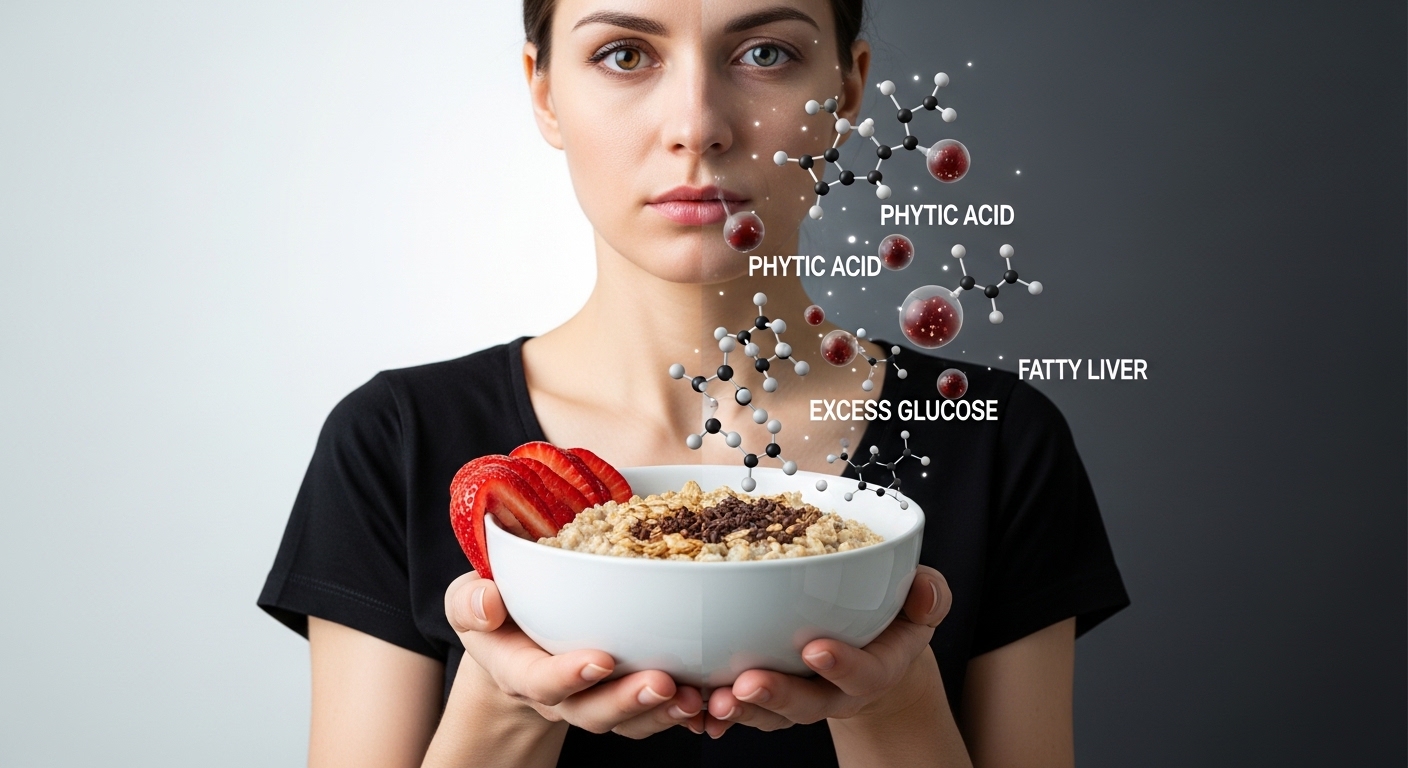
- The Anti-nutrient Trap: Oats are rich in phytic acid (phytates). This compound binds to essential minerals in your gut, like iron, zinc, and calcium, blocking their absorption. You think you’re nourishing yourself, but at a cellular level, oats are stealing vital minerals.
- Inflammation and Endothelial Damage: The combination of high carb loads and sugars generates constant insulin spikes. This state of hyperinsulinemia damages your endothelium (the inner lining of your arteries), promoting cardiovascular risk and silent inflammation that translates to joint pain and “brain fog.”
- Silent Diseases: Excess fructose (from large fruit portions and sweeteners) isn’t processed in your muscles; it goes straight to the liver. This is the fast track to Non-Alcoholic Fatty Liver Disease. Furthermore, these daily spikes are the gateway to Insulin Resistance and, in women, the main trigger for Polycystic Ovary Syndrome (PCOS).
🏋️♂️ Context is King: Your Activity Level
Your body’s response to this glucose tsunami depends on what you do after eating it:
- Sedentary Person (The worst-case scenario): If you work sitting at a desk, your energy “tank” (muscle glycogen) is already full. That bowl overflows the tank immediately, storing the excess as visceral fat and keeping your insulin sky-high all day.
- Light Exercise (Jogging, Yoga, Walking): Jogging for 40 minutes doesn’t destroy enough muscle fibers or empty your reserves to a level that justifies an 80-gram carb reload. You end up replenishing double the energy you just burned.
- High-Intensity Athletes (CrossFit, Sprints, Marathon): They do empty their reserves, and their muscles act like sponges for that glucose. However, using these bowls daily still takes a toll through anti-nutrients (poor mineral absorption for recovery) and an inflammatory load, which can slow down joint and muscle regeneration over time.
🛑 The 3 Final Nails in the Oatmeal Bowl Coffin
To finish off the illusion of this “perfect” breakfast, there are three truths the food industry omits:
- The Almond Milk Myth: Commercial versions are basically 95% water, added sugars, and thickening gums that inflame the intestinal lining. Their real nutritional value is almost zero.
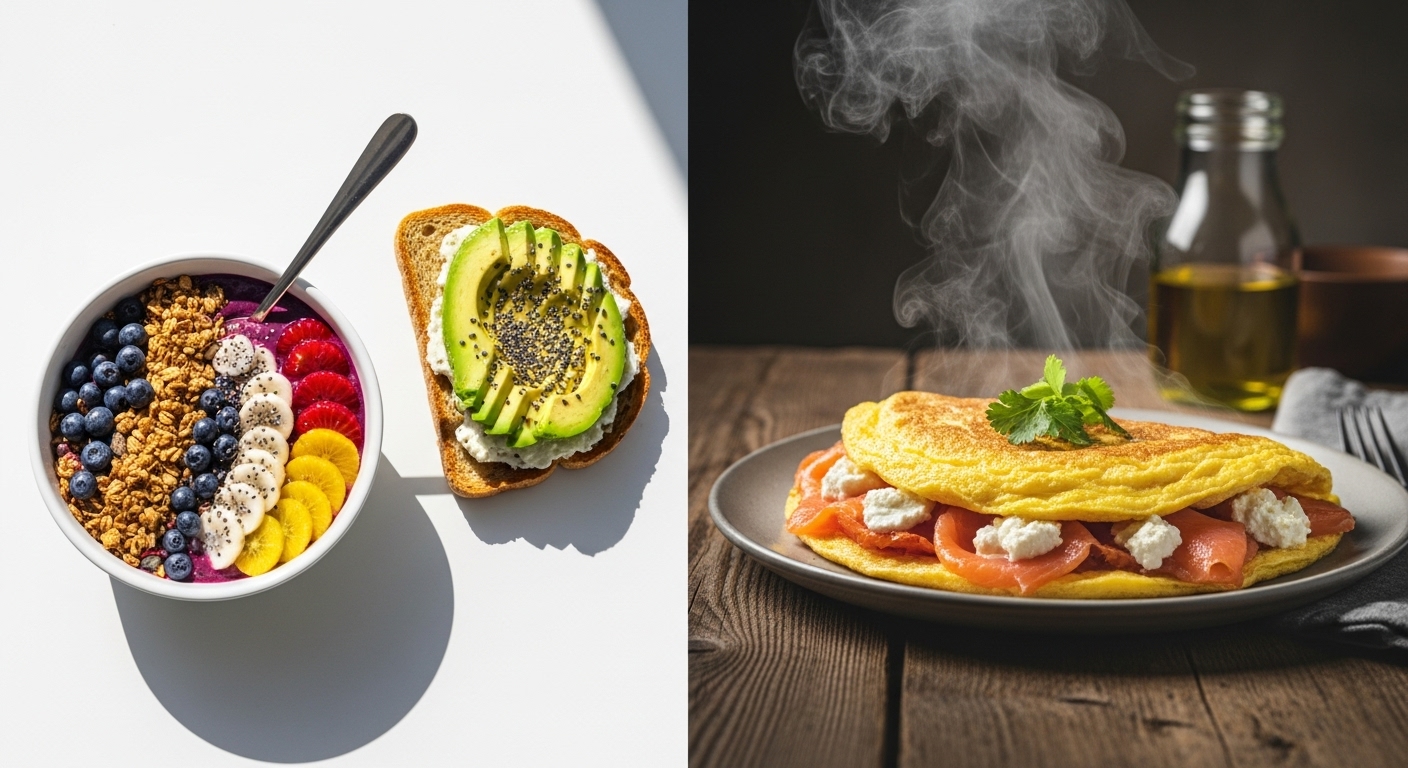
- The Protein Void: An optimal breakfast needs protein to build muscle mass and provide real satiety. These bowls are pure fats and carbs. Protein is conspicuously absent.
- The Dose Makes the Poison: People assume that because the ingredients are “natural,” they can eat industrial quantities. Half a bowl of oats with a banana and honey already exceeds the daily carbohydrate requirements for an average, inactive adult.
Conclusion: Don’t be fooled by aesthetics. A breakfast should nourish you, stabilize your hormones, and keep you full—not spike your insulin and rob you of minerals. Next time you see a perfect “Oatmeal Bowl” on social media, remember: science doesn’t lie, even if marketing tries to.
Scientific References & Evidence
1. Phytic Acid and Whole Grains for Health Controversy
- Title: Phytic Acid and Whole Grains for Health Controversy
- Description: This scientific paper details the mechanisms by which phytic acid (phytate), highly prevalent in cereals like oats, acts as an anti-nutrient. It explains how it strongly chelates essential metal cations such as zinc, iron, calcium, and magnesium in the intestinal tract, forming complexes that the human body cannot absorb, leading to a net negative mineral balance.
- URL: https://pmc.ncbi.nlm.nih.gov/articles/PMC8746346/
2. Fructose and Sugar: A Major Mediator of Non-Alcoholic Fatty Liver Disease
- Title: Fructose and sugar: A major mediator of non-alcoholic fatty liver disease
- Description: A clinical review demonstrating how the physiological metabolism of fructose (like that from large portions of ripe fruit and honey in oatmeal bowls) differs from glucose. Fructose directly precipitates fat accumulation in the liver (lipogenesis) and impairs fat oxidation, making it a direct risk factor for Non-Alcoholic Fatty Liver Disease (NAFLD) and insulin resistance.
- URL: https://pubmed.ncbi.nlm.nih.gov/29408694/
3. Beneficial Effects of a Higher-Protein Breakfast on the Appetitive, Hormonal, and Neural Signals Controlling Energy Intake Regulation
- Title: Beneficial effects of a higher-protein breakfast on the appetitive, hormonal, and neural signals controlling energy intake regulation…
- Description: This clinical trial provides evidence that a genuinely high-protein breakfast (as opposed to a carbohydrate-driven breakfast like oatmeal) is crucial for improving satiety. It proves that protein significantly reduces ghrelin (the hunger hormone) and increases Peptide YY (the satiety hormone), improving the overall metabolic response compared to high-carb meals.
- URL: https://pmc.ncbi.nlm.nih.gov/articles/PMC3718776/
Medical Disclaimer: The information contained in this article by Caloritrack (a product of KAI STUDIOS, S.A.S.) is strictly educational and informational. While we encourage empowerment through knowledge, neither Caloritrack nor KAI STUDIOS, S.A.S. acts as a medical entity. This content does not substitute in any way the advice, diagnosis, or treatment of a qualified medical professional. Every body is unique; always consult your primary care doctor or specialist before making significant changes to your diet, routines, or lifestyle.