

The Rhythm of Life: How Your Ancient Biological Clock Controls Your Modern Well-being
In a world of constant notifications and artificial lights, it’s easy to feel disconnected from our natural state. We struggle with energy slumps, poor sleep, and a feeling that something is “off.” But what if the key to unlocking better health isn’t a new trend, but a wisdom as old as humanity itself?
Welcome to the world of the circadian rhythm, your body’s master clock.
What is the Circadian Rhythm? An Inheritance from Our Ancestors
The circadian rhythm is your internal 24-hour cycle that regulates everything from your sleep-wake patterns to hormone release, metabolism, and body temperature. Think of it as the master conductor of an orchestra, ensuring all your biological functions play in perfect harmony.
This isn’t a modern discovery; it’s an evolutionary inheritance. For millennia, human life was governed by the rising and setting of the sun. Our ancestors rose with the light to hunt and gather, and rested when darkness fell. This constant cycle of light and dark hardwired a sophisticated clock into our DNA. Every cell in your body follows this ancient rhythm, a testament to a time when living in sync with nature wasn’t a choice—it was the key to survival.
The Benefits of Living in Sync with Your Inner Clock
When we honor this biological programming, the benefits are profound. Aligning your daily habits with your circadian rhythm is one of the most powerful things you can do for your health.
- Deep, Restorative Sleep: A properly calibrated rhythm helps you fall asleep easily and enjoy higher quality sleep, allowing your body and mind to truly repair and recharge.
- Abundant Daytime Energy: Instead of relying on caffeine, you’ll experience stable and vibrant energy throughout the day, because your body is producing cortisol (the “awake” hormone) at the right times.
- Metabolic Health & Weight Management: Your metabolism also follows this clock. Eating in sync with your rhythm improves digestion and helps regulate the hormones that control hunger and fat storage.
- Enhanced Mood and Mental Clarity: An imbalanced rhythm can contribute to mood swings and brain fog. Restoring the balance leads to better focus, a more stable mood, and increased resilience to stress.
- A Stronger Immune System: Your immune cells are most active during the night while you sleep. Respecting your sleep-wake cycle is fundamental for a robust immune response.
The Modern Challenge: A Clock Under Siege
Our modern lifestyle is often at war with our ancient biology. Late-night screen time, irregular meal schedules, and lack of morning sunlight confuse our internal clock, leading to a state called “circadian misalignment.” This is where the CaloriTrack philosophy becomes your greatest ally.
How CaloriTrack Helps You Reconnect
Understanding is the first step to taking control. In the 🌿 Health Dashboard of your CaloriTrack app, you’ll find a visual representation of your circadian rhythm status. It’s a powerful tool that helps you see, perhaps for the first time, how your daily choices impact your internal clock.
By tracking your sleep, meals, and wellness activities, the app gives you the data you need to make small, powerful adjustments. It’s not about perfection; it’s about progress and self-awareness on your path to optimal well-being.
Start Today: 3 Simple Steps to Reset Your Rhythm
- Greet the Morning Sun: Spend 10-15 minutes in natural sunlight shortly after waking. This is the most powerful signal to anchor your clock for the day.
- Be Consistent: Try to wake up and go to sleep around the same time every day, even on weekends. Consistency is key.
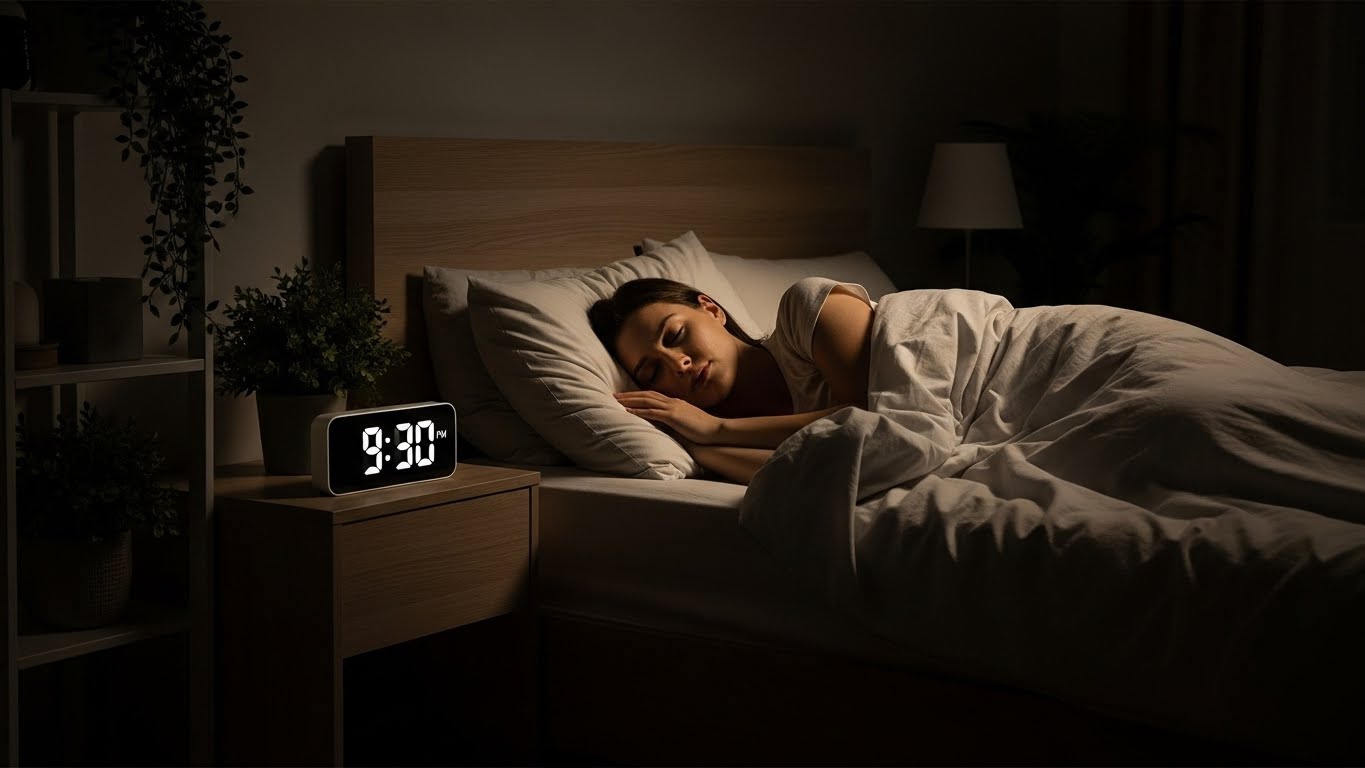
- Dim the Lights at Night: Reduce exposure to bright lights and screens 1-2 hours before bed. This allows your brain to produce melatonin, the hormone that signals it’s time to sleep.
Your journey to well-being is a return to yourself. By understanding and honoring your circadian rhythm, you are tapping into a profound source of health that has been with you all along.
Scientific References & Further Reading:
- National Institute of General Medical Sciences (NIGMS): Circadian Rhythms Fact Sheet. https://www.nigms.nih.gov/education/fact-sheets/Pages/circadian-rhythms.aspx
- Sleep Foundation: What Is Circadian Rhythm? https://www.sleepfoundation.org/circadian-rhythm
- PubMed Central (PMC): Effects of light on human circadian rhythms, sleep and mood. https://www.ncbi.nlm.nih.gov/pmc/articles/PMC6751071/
- Harvard Medical School, Brain Health: Circadian Rhythms and the Brain. https://hms.harvard.edu/news-events/publications-archive/brain/circadian-rhythms-brain
- StatPearls, NCBI: Physiology, Circadian Rhythm. https://www.ncbi.nlm.nih.gov/books/NBK519507/
Medical Disclaimer: The information contained in this article by Caloritrack (a product of KAI STUDIOS, S.A.S.) is strictly educational and informational. While we encourage empowerment through knowledge, neither Caloritrack nor KAI STUDIOS, S.A.S. acts as a medical entity. This content does not substitute in any way the advice, diagnosis, or treatment of a qualified medical professional. Every body is unique; always consult your primary care doctor or specialist before making significant changes to your diet, routines, or lifestyle.