

How to Support Your Body Against Fatty Liver: 100% Science, Strategic Nutrition, and Fasting.
Do you feel a constant fatigue that won’t go away no matter how much you sleep? Do you feel like you struggle a lot to lose weight even though you think you “eat right”? Or maybe, from time to time, you notice a slight heaviness or discomfort in the upper right part of your abdomen.
I know how frustrating it is to feel that your body isn’t responding as it should and that you just don’t have enough energy. It’s not your fault, and you are not alone. These are the silent symptoms of an extremely common condition today: fatty liver.
The great news is that, according to science, it is a highly reversible condition if we understand how our body works. No dogmas, no extreme diets, just pure science.
A Deceptive Symptom: Back Pain Without an Injury?
It’s very common to go to a massage therapist or chiropractor for chronic back pain, only to discover that your muscles and spine are perfectly fine. Medical science explains this connection through a fascinating phenomenon:
The liver itself has no nerve endings for pain. However, it is wrapped in a protective layer called Glisson’s capsule, which is very sensitive. When the liver accumulates too much fat, its size increases and it becomes inflamed. As it grows, it presses and stretches this capsule, generating a pain signal.
Why does your back hurt? The nerves in that area travel to the spinal cord along the same nervous “highways” that connect to your back and shoulders. The brain gets confused and “projects” the pain. This is known as referred pain. It is typically felt in the middle or upper right back, or under the right shoulder blade. If massages don’t give you real relief and the pain worsens after eating very heavy meals, your body isn’t asking for a chiropractor; it’s asking you to check your metabolic health.
What is fatty liver and why does it happen?
Imagine your liver is your body’s main factory and master filter. It manages your energy, cleans your blood, and regulates your hormones.
Fatty liver occurs when we send this factory more energy than it can process. When the liver no longer knows what to do with that excess energy, it has no choice but to “package” it as fat and store it inside its own cells. Literally, the factory starts to get clogged.
The Real Culprits (According to Science)
Historically, we blamed the natural fat in food, but controlled clinical studies have shown that the main factors creating fatty liver are metabolic:
- Excess Fructose: Unlike glucose (which the whole body can use), fructose is metabolized almost exclusively in the liver. When we consume excess fructose (especially in high-fructose corn syrup), the liver becomes saturated and turns it directly into fat (a process called de novo lipogenesis).
- Insulin Resistance: When the hormone insulin is chronically elevated, the body loses its ability to burn fat and stays in a constant “storage” mode.
- Caloric Surplus from Ultra-Processed Foods: Food that provides a huge amount of energy all at once, but zero real nutrients.
If We Don’t Take Care of It, What Happens?
The liver is your most noble organ, but it has a limit. If fat continues to accumulate, it starts to generate inflammation (known as steatohepatitis). If that inflammation lasts for years, healthy tissue begins to scar (fibrosis) and can eventually lead to cirrhosis or liver failure. We don’t want to get there, and the good news is that you are in the driver’s seat.
What Foods Should We Stop Consuming?
To “unclog” the liver, science tells us we must cut the inputs that are saturating it:
- Sweet Liquid Calories: Sodas, bottled juices, and even natural fruit juices. By removing the fiber from the fruit and drinking only the juice, we give the liver a direct hit of fructose. It’s better to eat the whole fruit.
- Refined Carbohydrates: Table sugar, sweet bread, white flour, and cookies. They skyrocket your insulin.
- Ultra-Processed Foods: Packaged items combining sugars, flours, and low-quality refined vegetable oils that promote cellular inflammation.
The Elephant in the Room: Alcohol
Even if your condition was caused by eating poorly and not by drinking, alcohol is processed in the exact same place. If your factory is already saturated, drinking alcohol is like adding fuel to the fire. To support your body, reducing or eliminating alcohol temporarily is non-negotiable.
So, What SHOULD I Put on My Plate?
To help your liver regenerate, base your diet on these three pillars:
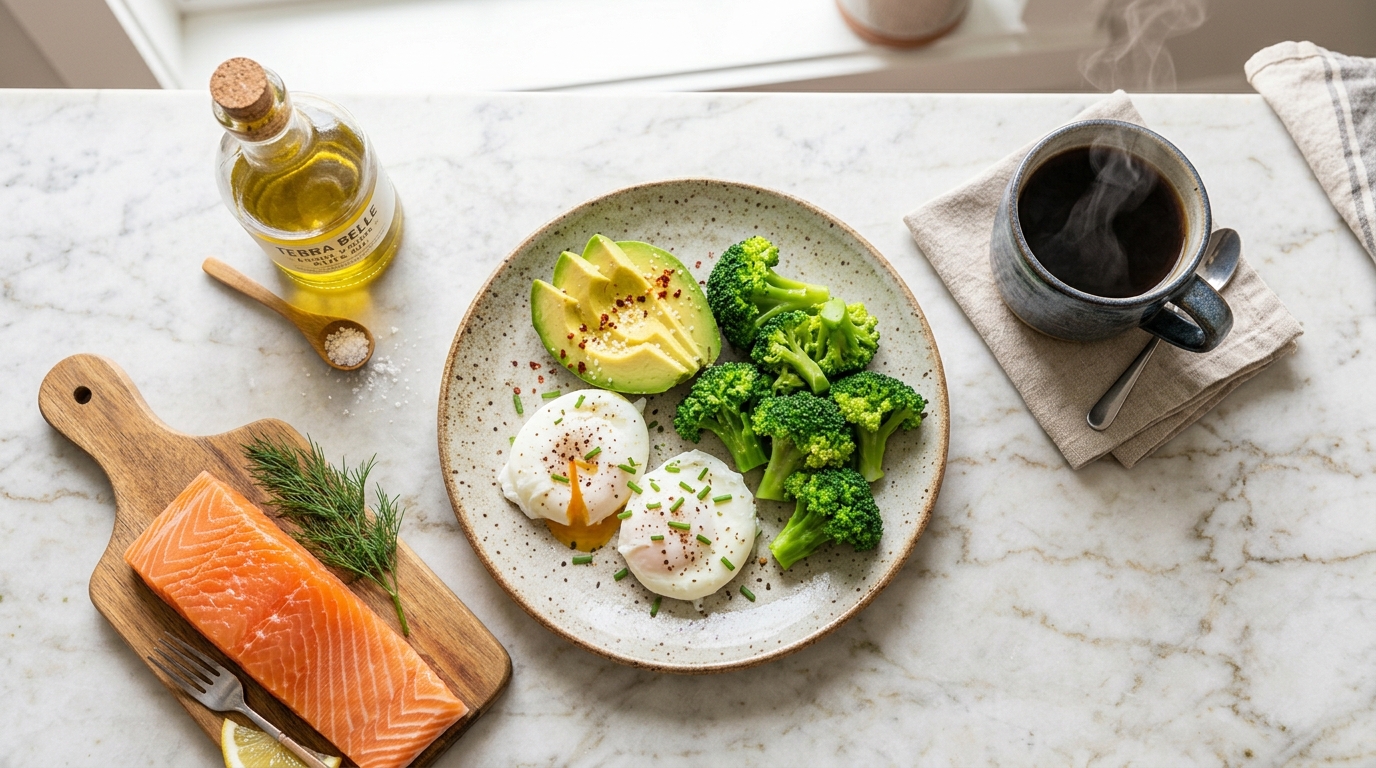
- Quality Protein and Eggs: The liver needs amino acids to repair itself. Additionally, egg yolks are rich in choline, a scientifically proven nutrient that helps transport and move fat out of the liver.
- Abundant Fiber (Especially Green Vegetables): Broccoli, spinach, and cabbage. Fiber traps toxins and improves your microbiome, which reduces the inflammation going straight to the liver.
- Anti-Inflammatory Fats: Extra virgin olive oil, avocado, and omega-3s (sardines, salmon). They help put out the cellular “fire” of inflammation.
A Bonus Benefit: If You Already Drink Black Coffee
It’s not a magic remedy, nor do you have to force yourself to start drinking it, but if you are already a regular black coffee drinker (no sugar and no milk), you have a scientific advantage. Multiple large-scale clinical studies have shown that it is highly hepatoprotective. Its antioxidants reduce inflammation and drastically decrease the risk of the condition progressing to fibrosis.
The Magic of Intermittent Fasting for Your Liver
This is where one of the most studied and free tools we have comes in: fasting. It’s not black magic; it’s basic physiology.
Why does it help the liver so much? When you go certain hours without eating, your insulin levels drop drastically. As insulin drops, your body gets the signal that it’s time to use reserves. And where does it go first? To the liver. The body starts emptying the stored sugar (glycogen) and then begins to “burn” that fat stuck in the liver to give you energy. It is, literally, giving your factory a much-needed break to do inventory and a deep clean.
How to Start Safely?
You don’t have to do days-long fasts or starve yourself. You can start supporting your body today with a super simple goal: a 12-hour fast.
- If you finish dinner at 8:00 PM, your next meal (breakfast) will be at 8:00 AM the next day.
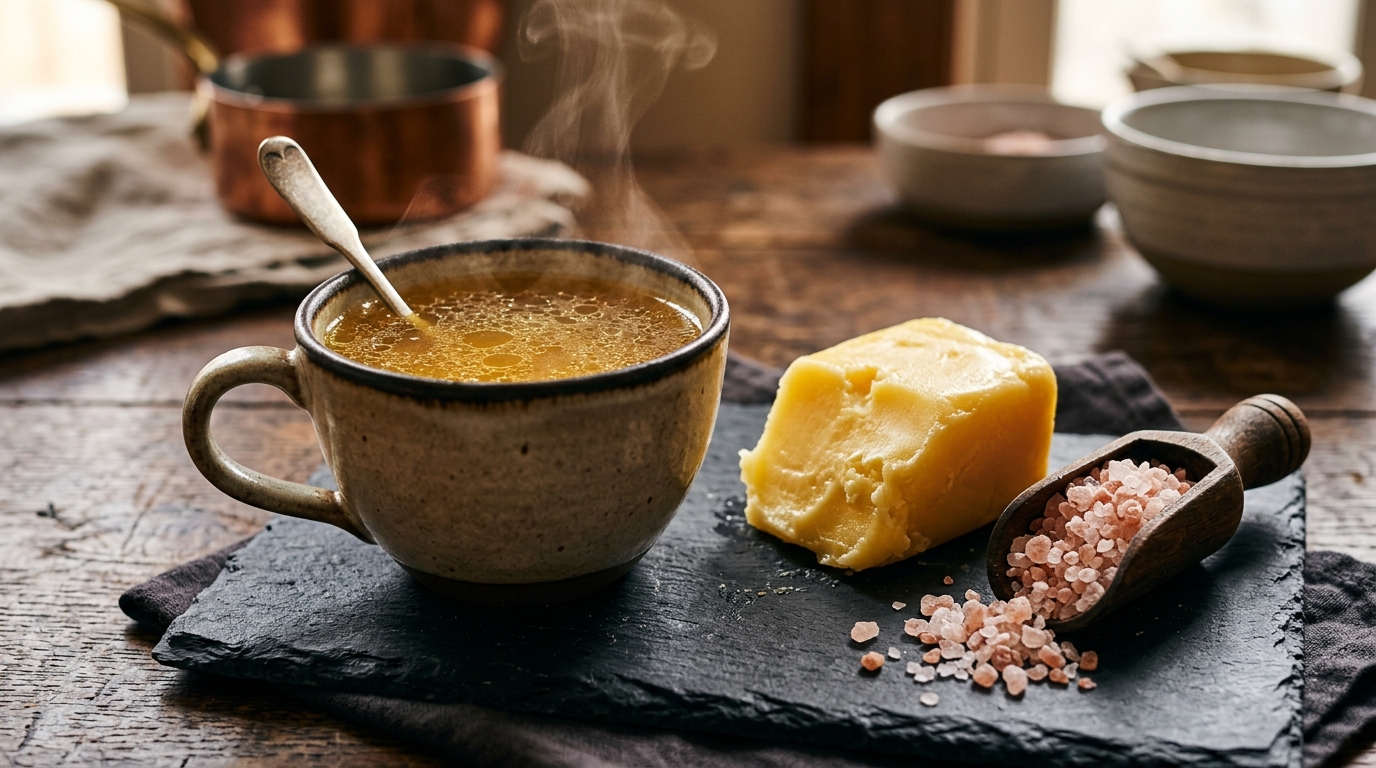
- During those 12 hours, you should only consume water, black coffee, or tea (no sugar, milk, or sweeteners).
Just by giving it that nightly break, you will allow your insulin to drop and your liver to start breathing again.
The Invisible “Ingredient”: Your Sleep Schedule
Hardly anyone talks about this in nutrition plans, but science has proven that the quality and schedule of your sleep are vital.
Just as you have a cycle for waking and sleeping, your liver has its own “internal clock.” During the night, when you enter deep sleep, your body lowers cortisol levels (the stress hormone) and gives the liver permission to focus on its natural detoxification and repair process.
The problem? If you constantly stay up late, sleep less than 7 hours, or have very irregular schedules, circadian misalignment occurs. Your liver receives contradictory signals and loses its ability to process fat efficiently. In fact, a lack of sleep worsens insulin resistance and “pushes” the liver to keep storing fat instead of burning it.
The Scientific Trick: Try to eat dinner at least 3 hours before going to sleep. If your liver doesn’t have to do the heavy lifting of digestion right when you lie down, it can use the night to do that deep cleaning and release stored fat. Sleeping well is not a luxury; it’s part of the strategy to recover your health.
If this information helped you, save it and share it with someone who always feels tired or has unexplained back pain. The control of our health is in what we eat, when we eat it, and how we rest!
(Note: The information in this post is based on current scientific evidence regarding nutrition and metabolism, but it does not substitute medical advice. If you take medication, have an advanced condition, or atypical pain, always consult your doctor before changing your diet or starting to fast).
📚 Scientific References
1. On Fructose Excess and Liver Fat Creation (Lipogenesis)
- Title: Fructose consumption, lipogenesis, and non-alcoholic fatty liver disease.
- Description: This clinical review explains in detail how fructose (unlike glucose) promotes “de novo lipogenesis” (creation of new fat) directly in the liver, leading to insulin resistance and the development of fatty liver.
- Hyperlink: https://www.ncbi.nlm.nih.gov/pmc/articles/PMC4985254/
2. On Black Coffee Consumption and Liver Protection
- Title: Coffee consumption and risk of nonalcoholic fatty liver disease: a systematic review and meta-analysis.
- Description: A large-scale meta-analysis demonstrating that regular coffee consumption is significantly associated with a lower risk of developing fatty liver and reduces the likelihood of the disease progressing to hepatic fibrosis in patients who already have it.
- Hyperlink: https://pubmed.ncbi.nlm.nih.gov/28135891/
3. On Intermittent Fasting and Insulin Resistance
- Title: Time-restricted eating for nonalcoholic fatty liver disease: a systematic review.
- Description: This study demonstrates how limiting the eating window reduces fasting insulin levels, decreases body weight, and significantly improves liver fat biomarkers in patients with this condition.
- Hyperlink: https://pubmed.ncbi.nlm.nih.gov/33580436/
4. On Choline (Egg Yolks) and Liver Fat Transport
- Title: Choline metabolism provides novel insights into nonalcoholic fatty liver disease and its progression.
- Description: Scientific evidence on how choline deficiency causes fat accumulation in the liver and how adequate intake of this nutrient (found in eggs) is crucial for exporting lipids (fats) out of liver cells.
- Hyperlink: https://www.ncbi.nlm.nih.gov/pmc/articles/PMC3601486/
5. On Sleep Deprivation, Circadian Rhythms, and Fatty Liver
- Title: Short sleep duration is associated with incident nonalcoholic fatty liver disease in a large South Korean cohort.
- Description: A massive longitudinal study concluding that sleeping fewer hours than necessary and having poor sleep quality drastically increase insulin resistance and the risk of accumulating fat in the liver, independent of other metabolic factors.
- Hyperlink: https://pubmed.ncbi.nlm.nih.gov/29032140/
6. On Referred Back Pain and Glisson’s Capsule
- Title: Anatomy, Abdomen and Pelvis, Liver (StatPearls).
- Description: Anatomical medical documentation explaining how liver tissue lacks pain receptors, but inflammation distends Glisson’s capsule, whose nerves share pathways with the phrenic nerve, causing referred pain in the right shoulder, scapula, and back.
- Hyperlink: https://www.ncbi.nlm.nih.gov/books/NBK535438/
Medical Disclaimer: The information contained in this article by Caloritrack (a product of KAI STUDIOS, S.A.S.) is strictly educational and informational. While we encourage empowerment through knowledge, neither Caloritrack nor KAI STUDIOS, S.A.S. acts as a medical entity. This content does not substitute in any way the advice, diagnosis, or treatment of a qualified medical professional. Every body is unique; always consult your primary care doctor or specialist before making significant changes to your diet, routines, or lifestyle.