



How to Shop in a Supermarket Designed for the Old Food Pyramid (Without Getting Trapped)
The new food pyramid is finally here (or at least, the awareness of it is), but if you walk into a grocery store today, you’ll realize something alarming: the building didn’t get the memo.
The government and modern science may have updated the guidelines, but the supermarket remains a temple dedicated to “Fitness” cereals and refined carbohydrates. The environment is hostile. That is why you need a survival strategy.
The Uncomfortable Truth: Your Health vs. Their Profits
The first thing you must understand before grabbing a cart is the enemy’s motivation. Big Food corporations don’t have “Public Health” departments; they have “Sales” and “Addiction Science” departments.
The goal of companies like Kellogg’s or Lays is simple: sell the maximum amount of product at the lowest possible cost.
- The Cereal Case: When Kellogg’s designs a new cereal, they aren’t thinking about your bone density or your insulin levels. They are thinking about cheap grains (corn, wheat) that can be stored for years, coated in sugar to light up your brain’s reward centers. It is cheap to make, expensive to sell, and designed so you never feel full.
- The “Betcha can’t eat just one” Effect: Industrial potato chips are designed with the exact ratio of salt, fat, and crunch to override your body’s satiety signals. It’s not a lack of willpower; it’s bio-engineering used against you.
They maximize “shareholder value” at the expense of your biology.
Perimeter Strategy: The Safe Zone
If you visualize a map of a typical supermarket, you’ll realize it is a concentric trap.
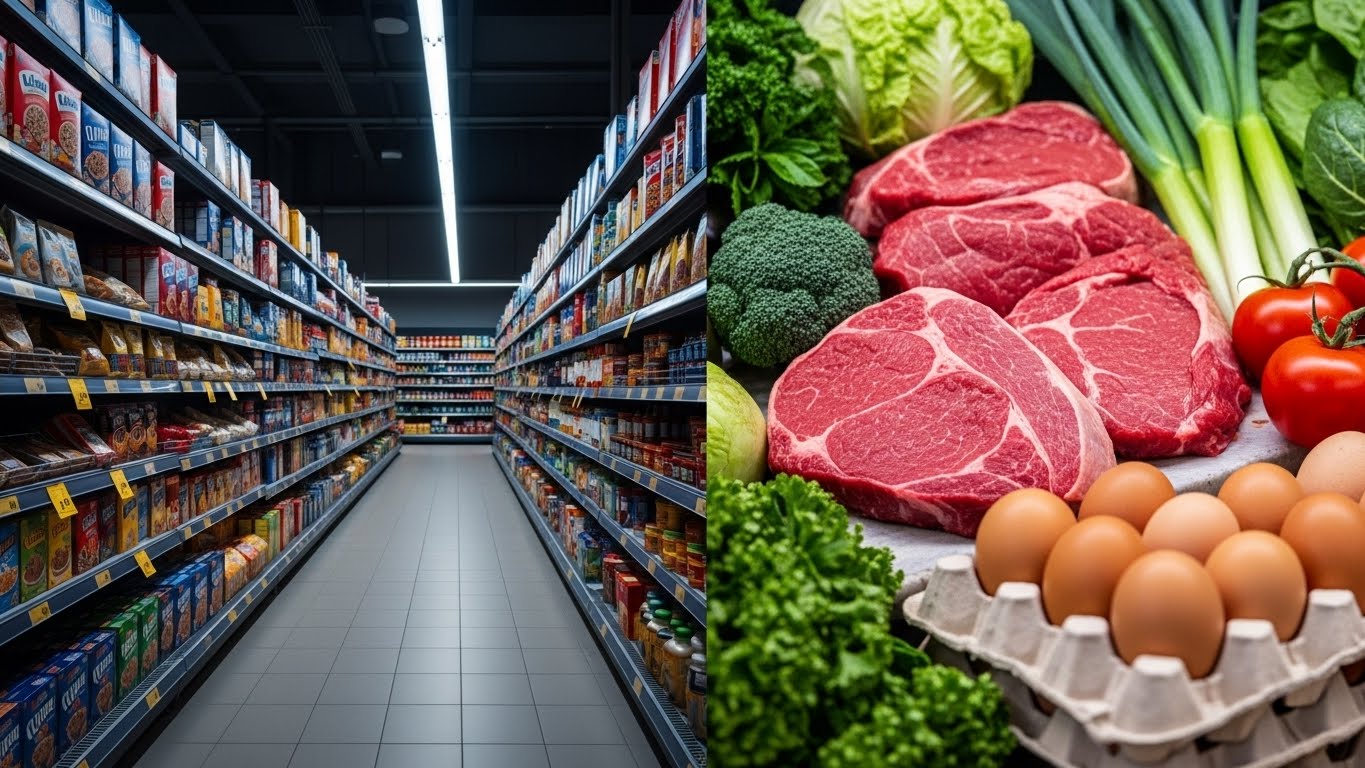
- The Death Zone (Central Aisles): The “immortals” live here. Boxes, bags, and cans that could survive a nuclear apocalypse. This is the old food pyramid at its worst: bases of flours, sugars, and processed foods.
- The Life Zone (The Perimeter): This is where you must operate. The edges of the supermarket are where you usually find the perishable, the real: meat, eggs, dairy, and vegetables.
Golden Rule: If it doesn’t rot in a week (or doesn’t require real refrigeration), it’s probably not food—it’s an “edible product.” Buy single-ingredient foods.
Label Auditing: Spotting the Imposter
The most powerful survival tool is knowing how to read the fine print. Ignore the front of the box (where it says “Natural,” “Fortified,” “Fit”). Flip the package over and go straight to the ingredients.
The rule is brutally simple: Less is more.
- Almond Milk: Should contain almonds and water. Why buy one that has 10 ingredients, gums, and stabilizers?
- Cheese: Should contain milk, cultures, rennet, and salt. If you see 7 ingredients, starches, or dyes, that isn’t cheese; it’s a “cheese-type product.”
- Vegan Meat: The supreme example of modern madness. Why trade a piece of meat (1 ingredient) for a veggie burger with 30 chemical ingredients, binders, and industrial oils just to mimic the taste of what you are avoiding?
The Blacklist: Enemy Ingredients
If you see any of these names on the label, put the product back on the shelf immediately. These are the chemical weapons of the industrial old food pyramid:
- Sodium Nitrite: Common in cheap deli meats.
- Monosodium Glutamate (MSG): An excitotoxin used to trick your brain into thinking bland food tastes delicious.
- Maltodextrin: An ultra-processed carbohydrate that spikes your glycemic index even faster than table sugar.
- High Fructose Corn Syrup (HFCS): The king of low costs. It is directly responsible for the epidemic of fatty liver and insulin resistance.
- Hydrogenated or Seed Oils (Soybean, Canola, Sunflower): Highly inflammatory and oxidized before you even open the bottle.
- Red 40 / Yellow 5: Petroleum-derived dyes. Your body doesn’t need paint; it needs nutrients.
Conclusion
Navigating the supermarket today is an act of rebellion. It requires ignoring colorful signs, avoiding the central aisles, and getting back to basics. The new food pyramid isn’t about grains at the base; it’s about prioritizing real food.
Don’t let a corporation decide your health just to balance their quarterly finances. Stay on the perimeter.
References and Scientific Evidence
Here are the studies backing the supermarket survival strategy for those who want to validate the “why” behind the advice:
1. The Effect of Ultra-Processed Foods on Caloric Intake
- Title: Ultra-Processed Diets Cause Excess Calorie Intake and Weight Gain: An Inpatient Randomized Controlled Trial
- Description: The famous controlled study by the NIH (Kevin Hall) demonstrated that when offered diets with matched macronutrients, people spontaneously ate 500 calories more per day when the food was ultra-processed compared to whole foods.
- URL: https://pubmed.ncbi.nlm.nih.gov/31105044/
2. Real Meat vs. Plant-Based “Meat” (Nutritional Differences)
- Title: A metabolomics comparison of plant-based meat and grass-fed meat indicates large nutritional differences
- Description: A Duke University study published in Scientific Reports. It reveals that while the nutrition label may look similar, real meat contains 22 essential metabolites (such as amino acids, vitamins, and antioxidants) that disappear in ultra-processed vegan imitations.
- URL: https://www.nature.com/articles/s41598-021-93100-3
3. Fructose and Fatty Liver
- Title: Fructose Consumption, Lipogenesis, and Non-Alcoholic Fatty Liver Disease
- Description: Published in the journal Nutrients, this analysis details the molecular mechanisms by which fructose (omnipresent in the supermarket) drives visceral fat creation and insulin resistance in a way that glucose alone does not.
- URL: https://www.mdpi.com/2072-6643/9/9/981
4. Vegetable Oils and Heart Health (The Oxidized Omega-6 Hypothesis)
- Title: Omega-6 vegetable oils as a driver of coronary heart disease: the oxidized linoleic acid hypothesis
- Description: Published in the BMJ’s Open Heart. It argues how excessive consumption of linoleic acid (industrial seed oils) promotes LDL oxidation and vascular inflammation, contradicting the old recommendation to use them “for heart health.”
- URL: https://openheart.bmj.com/content/5/2/e000898
5. Maltodextrin and Glycemic Response
- Title: Nutrition, Health, and Regulatory Aspects of Digestible Maltodextrins
- Description: A technical review confirming that digestible maltodextrin is rapidly absorbed in the small intestine, causing glucose spikes often higher than table sugar, despite not always being classified as “sugar” on the front label.
- URL: https://www.ncbi.nlm.nih.gov/pmc/articles/PMC4940893/
Medical Disclaimer: The information contained in this article by Caloritrack (a product of KAI STUDIOS, S.A.S.) is strictly educational and informational. While we encourage empowerment through knowledge, neither Caloritrack nor KAI STUDIOS, S.A.S. acts as a medical entity. This content does not substitute in any way the advice, diagnosis, or treatment of a qualified medical professional. Every body is unique; always consult your primary care doctor or specialist before making significant changes to your diet, routines, or lifestyle.