

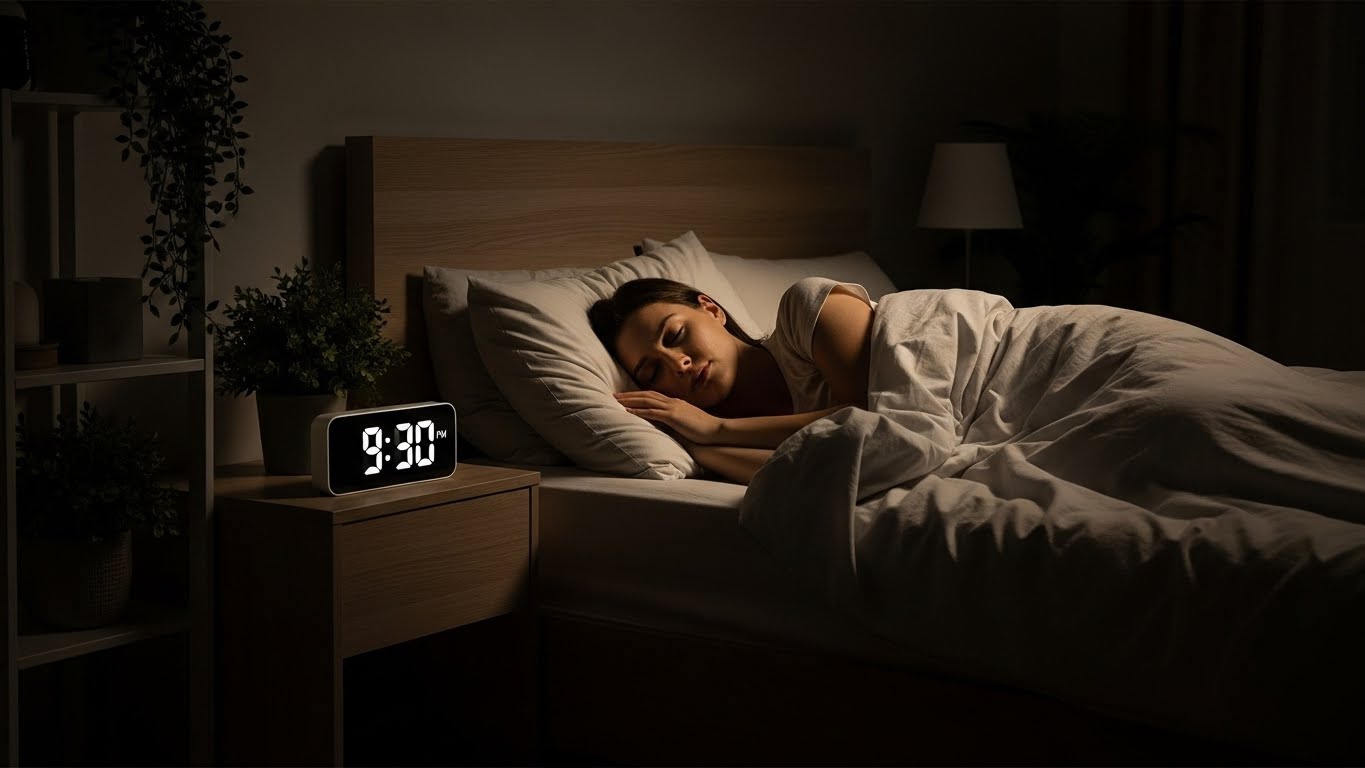
The Invisible Ceiling of Your Potential: Why Sleeping Late is Holding You Back
Many people wonder why, despite their best efforts, they fail to make progress in their physical, emotional, or professional goals. The answer usually isn’t in what you do during the day, but in what you don’t do at night. If you want to improve any aspect of your life, sleep is non-negotiable; it is the foundation of your human architecture.
The Danger of Victimhood: The Example of Mikhaila Peterson
Before you tell yourself “that’s just how I am” or “I have bad genetics,” look at the case of Mikhaila Peterson, daughter of psychologist Jordan Peterson. She was born with a devastating autoimmune disease; she suffered multiple joint replacements at a young age and lived in a state of depression and fatigue. For years, she blamed herself and life, using her illness as the ultimate pretext for her suffering.
Until her father confronted her: she could not keep using her condition as an excuse not to improve. That shift in mindset led her to take total responsibility for her biology. By radically changing her diet (to a carnivore diet) and aligning her lifestyle, her “incurable” problems disappeared. The body has an amazing capacity for healing, but you have to stop sabotaging it.
1. The “Night Owl” Trap
It’s hard to hear, but going to bed at 12:00 AM or 1:00 AM and waking up at 8:00 AM or later is not healthy, even if you get your 8 hours. The body doesn’t just need quantity; it needs synchronicity. The correct way is to align with sunlight:
- Option A: Sleep at 10:00 PM / Wake up at 6:00 AM.
- Option B: Sleep at 9:00 PM / Wake up at 5:00 AM.
2. The Biological Dictator: Circadian Rhythm
We have a master clock in the brain that dictates when our organs are repaired. If the body begins critical detoxification processes at 10:00 PM—as occurs with the lymphatic and hepatic (liver) systems—it is totally absurd to be awake or, worse, eating dinner. You are trying to mop the floor while people are still walking on it; the result is an organism that never finishes eliminating its own waste.
3. The Mental Bill: Your Brain Without Clarity
There are people who do not know their true intellectual potential. They live in a constant fog, thinking “that’s just who they are,” when the reality is that their brain is toxic.
- The Chemical “Why”: During deep sleep, the glymphatic system activates to “wash” the brain of toxins. If you go to sleep late, this process is cut short.
- The Emotional Labyrinth: If you have work problems or a relationship crisis, a brain without rest cannot secrete enough serotonin and dopamine. Without these neurotransmitters, you lose resilience; any challenge seems like an insurmountable mountain. Your amygdala (the fear center) becomes hyperactive and keeps you trapped in a hole of negativity, preventing you from seeing the rational way out.
4. The Physical Bill: The Vulnerable Terrain
Sleeping late accelerates aging and weakens your biological shield. Recovery isn’t just “resting”; it is rebuilding.
- Premature Aging: The highest peak of growth hormone occurs before 12 AM. If you sleep at 1 AM, you age biologically faster.
- The Terrain for Disease: A body that doesn’t sleep well is a “vulnerable terrain.” Your immune system is suppressed, giving a green light to viruses, bacteria, and fungi to attack. On the contrary, when you sleep early, your terrain is strong and clean. The body heals almost everything if you stop getting in its way.
5. Breaking the Dogma: You Weren’t Born to Survive, But to Thrive
Enough with the excuses. Break the paradigm that you “were born sick” or that “your life is just like this.” That is the mindset of someone who has accepted defeat before fighting. Sleeping early is an act of discipline that moves you out of “survival mode” and into “thrive mode.”
Conclusion: The Foundation of Transformation
This doesn’t mean sleep solves everything by magic, but it is the indispensable foundation to work on everything else. And one final point: If you aren’t interested in improving, at least don’t drag others down. Don’t be that person who “tempts” family or friends who are trying to sleep early just out of pure selfishness. If you choose the bad habit, don’t sabotage the progress of those you love.
“No man is free who is not master of himself.” — Epictetus
References and Scientific Evidence
- The Glymphatic System (Brain Cleaning):
- Description: A fundamental study explaining how the brain clears metabolic waste (like beta-amyloid) primarily during sleep.
- Reference: Xie, L., et al. (2013). “Sleep drives metabolite clearance from the adult brain”. Science.
- URL: https://www.science.org/doi/10.1126/science.1241224
- Circadian Rhythms and Hepatic Function:
- Description: Research on how the circadian clock regulates liver metabolism and detoxification.
- Reference: Reinke, H., & Asher, G. (2016). “Crosstalk between metabolism and circadian clocks”. Nature Reviews Molecular Cell Biology.
- URL: https://www.nature.com/articles/nrm.2016.51
- Sleep and the Immune System:
- Description: Analysis of how lack of sleep suppresses immune response and increases susceptibility to infection.
- Reference: Besedovsky, L., et al. (2012). “Sleep and immune function”. Pflügers Archiv – European Journal of Physiology.
- URL: https://link.springer.com/article/10.1007/s00424-011-1044-0
- Amygdala Reactivity and Mental Health:
- Description: A study showing how sleep deprivation disconnects the prefrontal cortex from the amygdala, causing emotional instability.
- Reference: Yoo, S. S., et al. (2007). “The human emotional brain without sleep — a prefrontal amygdala disconnect”. Current Biology.
- URL: https://www.cell.com/current-biology/fulltext/S0960-9822(07)02047-0
Medical Disclaimer: The information contained in this article by Caloritrack (a product of KAI STUDIOS, S.A.S.) is strictly educational and informational. While we encourage empowerment through knowledge, neither Caloritrack nor KAI STUDIOS, S.A.S. acts as a medical entity. This content does not substitute in any way the advice, diagnosis, or treatment of a qualified medical professional. Every body is unique; always consult your primary care doctor or specialist before making significant changes to your diet, routines, or lifestyle.