




Can Prolonged Fasting Replace Zone 2 Training? A Scientific Analysis
In the fields of sports physiology and longevity, “Zone 2” training has established itself as the gold standard for improving metabolic health. The premise is well-known: performing low-intensity, long-duration exercise forces the body to oxidize fats efficiently, thereby improving endurance and cellular health.
However, from a strictly biochemical perspective, physical exercise is not the only pathway to induce these adaptations. There exists an alternative physiological mechanism that replicates much of the cellular response of endurance training without the need for mechanical impact: Prolonged Fasting.
Below, we analyze the scientific evidence explaining why strategic caloric deprivation acts, at a molecular level, as a form of ultra-endurance training.
1. Demystifying Zone 2: It’s Not the Pace, It’s the Cellular Response
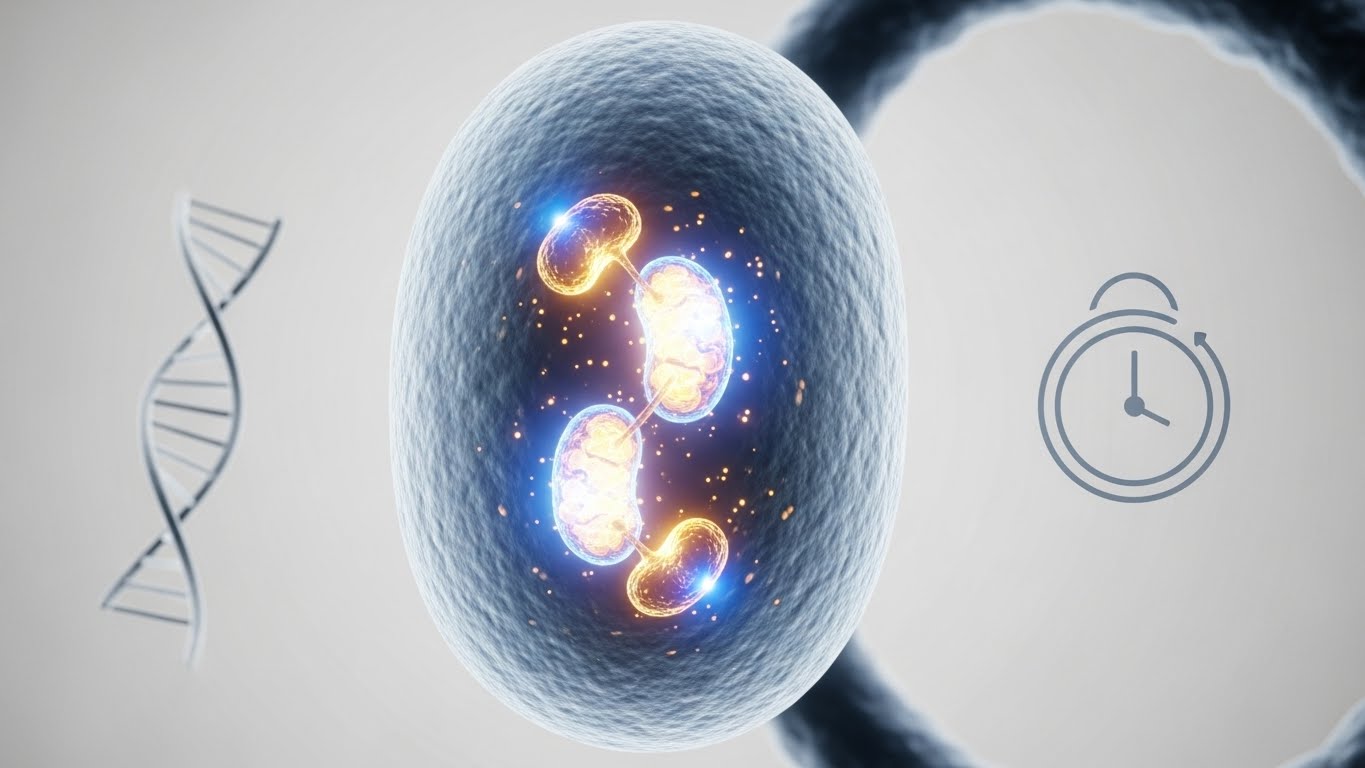
To understand the relationship between fasting and exercise, we must first understand what we are actually seeking with base cardiovascular training (Zone 2). The goal is not simply to “run slowly”; the goal is a specific biological phenomenon called Mitochondrial Biogenesis.
Mitochondria are the organelles responsible for producing energy (ATP) within cells.
- At high intensities (Zones 4 and 5), energy demand is so rapid that the body utilizes glucose (glycolysis) as its primary fuel.
- At low intensities (Zone 2), oxygen availability is sufficient for the body to metabolize fatty acids.
By maintaining the organism in this state of fat oxidation for prolonged periods, a specific adaptive stress signal is generated. The cell “understands” that it needs to become more efficient at processing lipids and responds by increasing the density and efficiency of its mitochondria.
2. The Master Switch: The PGC-1α Protein
The key to this entire process lies in a transcriptional coactivator protein called PGC-1α (Peroxisome proliferator-activated receptor gamma coactivator 1-alpha).
In scientific literature, PGC-1α is known as the “master regulator” of mitochondrial biogenesis. When this molecular switch is flipped, it triggers a cascade of events resulting in:
- The creation of new mitochondria.
- An increase in fatty acid oxidation capacity.
- A systemic improvement in insulin sensitivity.
Traditionally, it is assumed that the only way to activate PGC-1α is through the mechanical depletion of glycogen reserves (running or cycling for hours). However, evolutionary biology has endowed us with another mechanism to flip this switch.
3. Fasting as a Metabolic Stimulus: The Chemical Pathway
When the human body enters a state of deep fasting (typically exceeding 24–48 hours, and peaking towards 72–96 hours), physiological changes occur that mimic, with astonishing precision, the state of an endurance athlete in the final miles of a race.
A. Glycogen Depletion and AMPK Activation
In the absence of food intake, hepatic and muscular glycogen reserves drop drastically. This energy deficit raises the AMP/ATP ratio within the cell, which activates a critical energy sensor: AMPK (AMP-activated protein kinase).
The function of AMPK is to restore energy balance, and its primary method for doing so is the direct activation of PGC-1α.
B. The Physiological Conclusion This means that being physically at rest during hour 72 of a fast generates chemical signaling almost identical to that of performing prolonged cardiovascular exercise. In both scenarios, the body detects an absence of exogenous glucose and is forced to optimize its lipolytic machinery (fat burning) to survive. Fasting effectively trains the metabolism for efficiency.
4. Parallels with Altitude Training and Cellular Renewal
Beyond mitochondria, prolonged fasting induces systemic adaptations comparable to hypoxia training (altitude training).
During nutrient deprivation, the organism activates processes of hematopoietic autophagy. The body recycles old or inefficient immune cells and red blood cells to conserve energy. Upon re-feeding, a regenerative signal is triggered in the bone marrow, producing new, functional blood cells.
This “cleanup and renewal” process potentially improves oxygen transport capacity and immune efficiency—an effect frequently sought by high-performance athletes through altitude training camps.
5. The Critical Distinction: Chemical Adaptation vs. Mechanical Adaptation
It is vital to make a rigorous distinction to avoid oversimplification. While fasting can replicate the metabolic benefits of Zone 2, it does not replicate the mechanical benefits.
- Chemical Adaptation (The Engine): Fasting is excellent for improving enzymatic function, metabolic flexibility, and mitochondrial density. It prepares the “engine” to use fat as high-octane fuel.
- Mechanical Adaptation (The Chassis): Physical exercise is irreplaceable for generating structural adaptations such as increased stroke volume (heart pumping capacity), muscular capillarization (new blood supply routes), and the strengthening of tendons and ligaments through mechanical load.
Conclusion
Current evidence suggests that prolonged fasting should not be viewed merely as a weight-loss tool or digestive rest, but as a potent form of passive metabolic training.
For individuals seeking to optimize their mitochondrial health, fasting offers a pathway to activate longevity and endurance genes (PGC-1α) without the joint wear and tear associated with excessive running volume. It is a tool that complements physical training, attacking metabolic inefficiency from its biochemical root.
References and Scientific Evidence
1. The Mechanism of Mitochondrial Activation (AMPK and PGC-1α)
- Title: AMPK regulates energy expenditure by modulating NAD+ metabolism and SIRT1 activity.
- Description: This foundational study explains the exact biochemistry of how low energy states (such as fasting or exercise) activate AMPK. It details how this activation increases NAD+ levels, which in turn activates sirtuins and PGC-1α deacetylation, igniting mitochondrial biogenesis. It provides hard evidence that glucose scarcity improves cellular efficiency.
- URL: https://www.ncbi.nlm.nih.gov/pmc/articles/PMC2664389/
2. Prolonged Fasting and Cellular Regeneration (The “Renewal” Effect)
- Title: Prolonged Fasting Reduces IGF-1/PKA to Promote Hematopoietic-Stem-Cell-Based Regeneration and Reverse Immunosuppression.
- Description: Research led by Dr. Valter Longo (USC). It demonstrates how prolonged fasting induces the body to recycle old and damaged immune cells (autophagy) and activates hematopoietic stem cells to generate new, “youthful” blood and immune systems upon re-feeding. This supports the point regarding oxygen transport system renewal.
- URL: https://www.ncbi.nlm.nih.gov/pmc/articles/PMC4102383/
3. Mitochondrial Biogenesis in Humans via Caloric Restriction
- Title: Calorie Restriction Increases Muscle Mitochondrial Biogenesis in Healthy Humans.
- Description: A key clinical study conducted on humans. It demonstrates that strategic caloric deprivation increases the expression of genes related to mitochondrial function (including PGC-1α) and improves skeletal muscle bioenergetic efficiency, validating the theory that “less food” can translate to “more energy.”
- URL: https://www.ncbi.nlm.nih.gov/pmc/articles/PMC1865574/
4. Comparative Metabolic Adaptations: Fasting vs. Exercise
- Title: Effects of Intermittent Fasting on Health, Aging, and Disease.
- Description: Published in The New England Journal of Medicine, this review analyzes how fasting triggers a metabolic switch (from glucose to ketones) that elicits cellular and molecular adaptations very similar to those of regular aerobic exercise, improving stress resistance and longevity.
- URL: https://www.nejm.org/doi/full/10.1056/NEJMra1905136
Medical Disclaimer: The information contained in this article by Caloritrack (a product of KAI STUDIOS, S.A.S.) is strictly educational and informational. While we encourage empowerment through knowledge, neither Caloritrack nor KAI STUDIOS, S.A.S. acts as a medical entity. This content does not substitute in any way the advice, diagnosis, or treatment of a qualified medical professional. Every body is unique; always consult your primary care doctor or specialist before making significant changes to your diet, routines, or lifestyle.