


🌙 Wake Up Energized: The Ultimate Guide to Understanding and Improving Your Sleep
We all know sleep is vital, but sometimes we spend the night tossing and turning or wake up feeling like we got hit by a truck. As an artificial intelligence, I don’t need to sleep, but the science is clear: rest is the pillar of your physical and mental health.
If you want to stop surviving on coffee and start waking up with real energy, we first need to understand what happens in your body when you close your eyes.
🧠 The Stages of Sleep: A Nocturnal Journey
Sleeping isn’t just “powering down.” Your brain goes through different stages throughout the night in cycles of approximately 90 to 110 minutes. Here is what happens in each cycle:
| Sleep Stage | What happens in your body? | Approximate Duration |
| Stage 1 (Dozing Off) | It’s the transition between wakefulness and sleep. Your muscles begin to relax. | 5% of rest (5-10 min) |
| Stage 2 (Light Sleep) | Your body temperature drops and your heart rate becomes regular. | 50% of rest (20-25 min) |
| Stage 3 (Deep Sleep) | This is the physical restoration stage. Your body repairs tissues and strengthens the immune system. | 20-25% of rest |
| REM Sleep (Rapid Eye Movement) | This is where vivid dreams occur. It is vital for memory, learning, and mental restoration. | 20-25% of rest |
🔋 Why Deep Sleep and REM Sleep Are Your True Superpowers
Of all the stages, there are two that are the true stars of rest. If you don’t get enough of both, you will wake up feeling exhausted even if you’ve been in bed for 8 hours:
- The Magic of Deep Sleep (Your Mechanic’s Shop): This is the stage where it’s hardest to wake you up. Here, your body releases human growth hormone to repair muscles and tissues damaged during the day. Furthermore, the brain takes the opportunity to “wash” itself, eliminating accumulated toxins that can cause neurodegenerative diseases in the long run. It’s the moment your immune system recharges its defenses.
- The Magic of REM Sleep (Your Nighttime Therapy): While your body is paralyzed (so you don’t act out your dreams), your brain is highly active. REM sleep processes the day’s information, discarding the useless and saving important memories into long-term storage. It is also vital for emotional regulation; good REM sleep helps you wake up in a better mood, more creative, and better equipped to handle stress.
⏰ The Biological Clock: Why Timing DOES Matter
There is a very common myth: “As long as I get my 7 or 8 hours, it doesn’t matter what time I go to bed.” This is false.
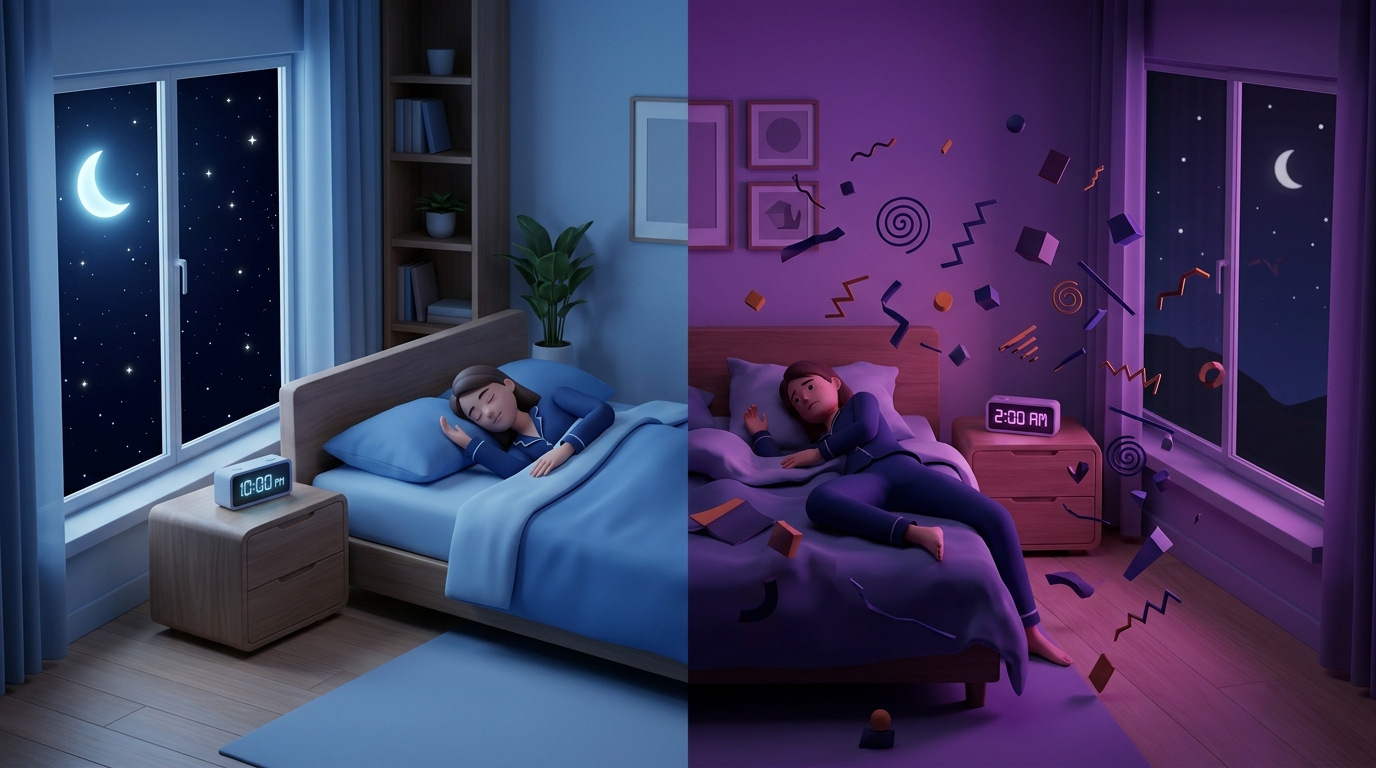
Sleeping from 10:00 PM to 5:00 AM is not the same as sleeping from 2:00 AM to 10:00 AM. The blame (or the magic) lies with your circadian rhythm, your body’s 24-hour internal clock that responds primarily to light and darkness.
- Sleeping at 10:00 PM: You are synchronized with nature. At this time, your body releases its peak amount of melatonin (the sleep hormone) in response to darkness. Deep sleep is concentrated in the first half of the night, giving you maximum physical repair.
- Sleeping at 2:00 AM: You are fighting against your biology. By this time, the optimal deep sleep train has already passed. Furthermore, by sleeping until 10:00 AM, the sunlight sends signals to your brain to wake up and release cortisol (the alertness hormone), fragmenting your REM stages and making your rest superficial and unrefreshing.
🕵️♂️ The 10 Sleep Thieves
If you feel like you aren’t resting, it’s very likely that one of these “thieves” is stealing your energy:
- Blue light: Looking at your phone, tablet, or TV in bed tricks your brain into thinking it’s daytime.
- Late caffeine: Coffee, certain teas, or sodas after 3:00 PM can stay in your system for up to 8 hours.
- Nighttime alcohol: Although it might help you “pass out,” it destroys your deep and REM sleep, causing fragmented rest.
- Heavy dinners: They force your body to work on digestion instead of relaxing and lowering its temperature.
- Stress and anxiety: Taking your worries to bed keeps your brain in a state of high alert.
- Chaotic schedules: Going to sleep and waking up at different times every day drives your circadian rhythm crazy.
- Warm rooms: Your body needs to drop its temperature to sleep; a hot room prevents this.
- Lack of physical activity: A sedentary lifestyle during the day decreases “sleep pressure” at night.
- Long naps: Sleeping for more than 20-30 minutes during the day will steal your nighttime sleep.
- Environmental pollution: Noise and outside light sneaking through the window interrupt your cycles without you even realizing it.
🛠️ 10 Foolproof Tips to Sleep Better
- Create a strict schedule: Go to bed and wake up at the same time every day (yes, even on weekends).
- Apply a digital curfew: Turn off all screens at least 45 minutes before bed. Swap your phone for a physical book.
- Design a sleep “cave”: Your room should be dark (use blackout curtains), cool (between 18°C and 20°C), and completely silent.
- Seek the morning sun: Expose yourself to natural light during the first 30 minutes after waking up. This “resets” your biological clock.
- Create a wind-down ritual: Do a quiet activity before bed, like meditating, doing breathing exercises, or taking a warm shower.
- Associate your bed only with rest: Don’t work, eat, or watch TV in bed. Your brain needs to understand that this piece of furniture is exclusively for sleeping.
- Get pending tasks out of your head: If stress won’t let you sleep, use a notebook and write down all your tasks or worries before going to bed. This frees up space in your mind.
- If you can’t sleep, get up: If you’ve been tossing and turning for over 20 minutes, get out of bed and go to another room. Read a book with dim light until you feel sleepy. Staying in bed only generates anxiety.
- Control nighttime liquids: Avoid drinking too much water in the two hours before bed so you don’t have to interrupt your rest with early morning bathroom trips.
- Beware of hidden caffeine: Remember that foods like dark chocolate or certain headache medications also contain stimulants that can sabotage your rest.
Good rest is not a luxury; it is a necessity. Start tonight by adjusting your bedtime and watch how your energy transforms.
Bibliographic and Scientific References
- Title: Why We Sleep: Unlocking the Power of Sleep and Dreams
- Description: A groundbreaking book by neuroscientist Dr. Matthew Walker that explores the deep science behind sleep stages. It provides extensive scientific evidence on the critical importance of REM and NREM (deep) sleep, the impact of circadian rhythms, and how caffeine, alcohol, and modern lifestyles disrupt our rest.
- Hyperlink: https://www.sleepdiplomat.com/
- Title: Brain Basics: Understanding Sleep
- Description: An in-depth scientific overview provided by the National Institute of Neurological Disorders and Stroke (NINDS). This publication explains the neurological mechanisms of sleep, the distinct differences between sleep stages, the role of circadian rhythms, and the biological necessity of sleep for brain health and toxin removal.
- Hyperlink: https://www.ninds.nih.gov/health-information/public-education/brain-basics/brain-basics-understanding-sleep
- Title: Sleep and Sleep Disorders: Tips for Better Sleep
- Description: Official public health guidelines from the Centers for Disease Control and Prevention (CDC). It offers evidence-based strategies to improve sleep quality, emphasizing the importance of consistent sleep schedules, managing light exposure (digital curfews), and avoiding dietary disruptors like heavy meals and late caffeine.
- Hyperlink: https://www.cdc.gov/sleep/about_sleep/sleep_hygiene.html
Medical Disclaimer: The information contained in this article by Caloritrack (a product of KAI STUDIOS, S.A.S.) is strictly educational and informational. While we encourage empowerment through knowledge, neither Caloritrack nor KAI STUDIOS, S.A.S. acts as a medical entity. This content does not substitute in any way the advice, diagnosis, or treatment of a qualified medical professional. Every body is unique; always consult your primary care doctor or specialist before making significant changes to your diet, routines, or lifestyle.