




🚨 More sole, more risk: The uncomfortable truth about your favorite sneakers. 🚨
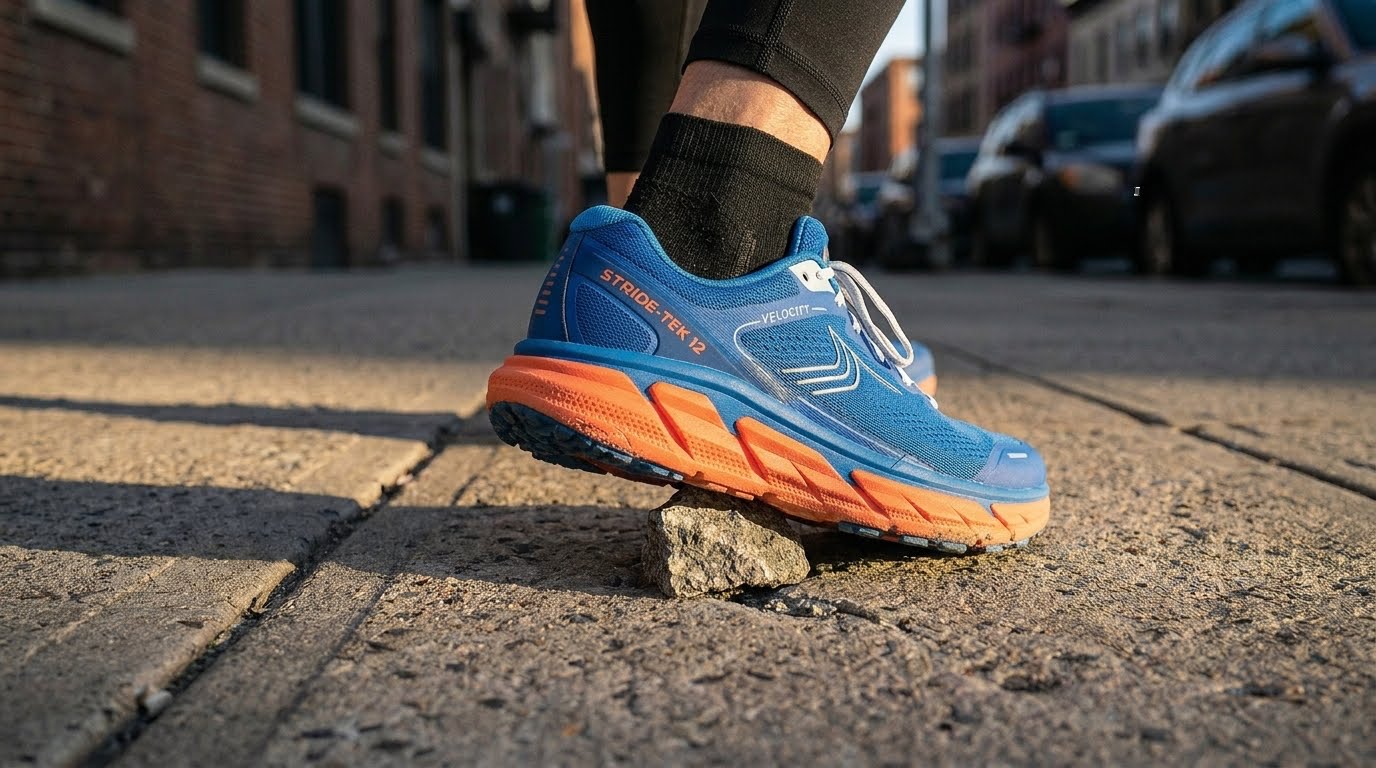
We all love the feeling of walking on clouds. The soles of our sneakers have become increasingly thicker, taller, and more cushioned. They look amazing, but what happens when you’re walking distracted and step into a pothole or the edge of a sidewalk?
Wearing shoes with very thick and cushioned soles greatly increases the risk of spraining your ankle, compared to wearing completely flat and thin shoes (known as barefoot or minimalist footwear).
And no, it’s not magic, it’s pure physics:
- The “stilt” effect: Imagine walking on small wooden stilts. If you misstep, the fall is abrupt. The thicker the sole, the further your foot is from the ground, and the edge acts as a lever that bends your ankle outward with a lot of force. With a shoe that’s flush to the ground, that leverage is almost nonexistent.
- Your feet become “blind”: The soles of your feet have thousands of sensors to tell your brain how to keep your balance. Thick soles act like a blindfold. Your brain takes longer to notice the unevenness, and by the time it sends the command to your muscles to react, your ankle is already bent. With thin soles, the reflex is instantaneous.
- The “brick” shoe: Tall soles need to be stiff to maintain stability. If you step on a rock with the edge, the whole shoe tilts at once, dragging your ankle with it. A flexible shoe simply bends, “hugs” the rock, and leaves your ankle safe.
The “cast foot” effect and long-term consequences
The problem with traditional footwear goes far beyond a simple sprain. Think about this: What happens to an arm if you wear it in a cast for six months? Its muscles weaken, lose strength, and atrophy from lack of use.
That is exactly what conventional sneakers do to your feet every single day:
- Sleeping muscles: By giving your foot an extreme “cushion” and artificial arch support, the more than 100 muscles, tendons, and ligaments in your foot stop working. Over time, your foot becomes weak and entirely dependent on that thick sole.
- The “hidden heel” and your back: Almost all sneakers have a heel that is higher than the toe. This tilts your body slightly forward. To keep from falling, you compensate by arching your lower back and tensing your knees all day. Barefoot shoes are completely flat, allowing your spine to rest in its natural posture, which relieves many chronic back and hip pains.
- Caged toes: Look at your sneakers from above: most of them end in a point, squeezing your toes against each other. In the long run, this deforms the foot, affects circulation, and causes bunions. A minimalist shoe has the actual shape of a foot (wide at the toes), letting your toes spread out like a fan to give you solid and natural support.
⚠️ A crucial warning: The transition process
If this information makes sense to you and you are thinking about giving barefoot shoes a try, there is a golden rule you cannot ignore: your body needs time.
For everyday walking or going to the office, you can make the change almost immediately and start enjoying the benefits. But if you play sports, and especially if you run, the story is completely different.
Remember the cast foot example: you have untrained your whole body (your muscles, your ligaments, and your Achilles tendon) from moving on its own for years. If today you are used to running 10 kilometers in your traditional sneakers, trying to run those same 10 kilometers tomorrow in barefoot shoes is a guaranteed recipe for injury.
You have to give your body the chance to readapt, wake up those sleeping muscles, and get strong again. It is a process that requires patience and smart progression; it definitely cannot be done overnight.
The takeaway?
This isn’t about demonizing the footwear industry, but it is fundamental to understand that modifying the natural way we walk has a silent cost on the body.
Giving your feet back the freedom to feel the ground, to use their own muscles, and to step as nature designed them, has immense benefits for your joints and your long-term health.
The information is on the table, clear and unfiltered. Now that you know how your body works, the decision of what to put on your feet tomorrow is entirely yours.
📚 Bibliography and Scientific References
1. Foot position awareness: the effect of footwear on instability, excessive pronation, and the sprain
- Description: This classic study by S. Robbins and E. Waked demonstrates how highly cushioned athletic footwear significantly decreases proprioception (the foot’s ability to sense the ground). The authors conclude that this sensory isolation causes a delayed neuromuscular response, which markedly increases the frequency and risk of ankle sprains, supporting the “blind feet” concept.
2. Foot strike patterns and collision forces in habitually barefoot versus shod runners
- Description: Published in the prestigious journal Nature by Harvard evolutionary biologist Dr. Daniel E. Lieberman. This is a foundational article for understanding the physics and biomechanics of the foot. It details how the stack height and cushioning of traditional footwear alter the natural strike pattern, whereas the bare foot uses its own anatomical structure to absorb and mitigate joint impact efficiently.
3. Walking in Minimalist Shoes Is Effective for Strengthening Foot Muscles
- Description: This research led by S. Ridge scientifically validates the “cast foot” effect. Using MRI scans, the study proved that simply walking in minimalist (barefoot) shoes significantly increases the volume and strength of intrinsic foot muscles, proving that traditional, highly supportive footwear weakens the muscular structure over time due to disuse.
4. Foot bone marrow edema after a 10-wk transition to minimalist running shoes
- Description: The scientific evidence behind the crucial warning regarding the transition process. This medical study analyzed runners transitioning from traditional to minimalist shoes. It shows that an abrupt transition causes bone stress (edemas), emphasizing that the human body requires a slow, progressive adaptation period to wake up and strengthen tissues before subjecting them to heavy loads.
Medical Disclaimer: The information contained in this article by Caloritrack (a product of KAI STUDIOS, S.A.S.) is strictly educational and informational. While we encourage empowerment through knowledge, neither Caloritrack nor KAI STUDIOS, S.A.S. acts as a medical entity. This content does not substitute in any way the advice, diagnosis, or treatment of a qualified medical professional. Every body is unique; always consult your primary care doctor or specialist before making significant changes to your diet, routines, or lifestyle.