

⏰ Your Internal Clock: The Secret to Having More Energy and Better Health
Have you ever wondered why you feel sleepy at night and wake up with energy in the morning? The answer lies in something fascinating called the circadian rhythm.
In simple terms, it is your internal 24-hour biological clock. It responds primarily to light and darkness, telling your body exactly what to do and at what precise moment of the day.
🎵 The Conductor of Your Body’s Orchestra
Imagine your body is a grand orchestra with many different instruments. The circadian rhythm is the conductor ensuring everyone plays in perfect harmony.
It doesn’t just control your sleep schedule. This master clock is in charge of tuning and orchestrating vital processes:
- Your Hormones: It decides when to release cortisol (to give you energy and alertness) and when to release melatonin (to relax you and make you sleepy).
- Your Metabolism: It tells your digestive system when it’s ready to process food efficiently and when it should rest.
- Your Energy: It regulates your body temperature, blood pressure, and concentration levels throughout the day.
⏱️ The Daily Sheet Music: Step by Step
To understand how this conductor directs us throughout 24 hours, let’s see exactly what happens inside you:
- 🌅 Morning (Waking Up): It’s action time! Your body releases a spike of cortisol to wake you up naturally. Your blood pressure rises, and your metabolism fires up. The ultimate hack: Getting direct sunlight in your eyes at this time is the main signal for your conductor to understand that the day’s concert has begun.
- ☀️ Midday: Your alertness, reaction time, and short-term memory are at their peak. Plus, your digestive fire is super efficient, making it usually the best time to process your largest or heaviest meal.
- 🌤️ Afternoon: Your body temperature, coordination, and muscle strength reach their peak, making it an excellent time to exercise! It’s normal to feel a slight energy “slump” mid-afternoon as the body adjusts its levels for the second half of the day.
- 🌇 Dusk / Early Evening: The sun sets, and the conductor changes the melody to a softer one. Cortisol levels plummet. With the lack of natural light, your brain gets the signal to start producing melatonin. Your digestion begins to slow down. The key fact: The ideal scenario for your health and for deep sleep is to have your last meal right at this moment, before the sun sets and while there is still natural light.
- 🌙 Night: Melatonin is at its highest point. Your body temperature drops, telling your brain it’s time to sleep. Metabolism goes on full pause; this is why eating heavy meals when it’s already dark confuses your body and ruins your rest. It is the crucial moment to turn off screens and wind down.
- 🌌 Midnight and Early Morning: Pure magic! You are in the deep sleep phase. Even though you are unconscious, your orchestra isn’t “turned off,” it’s just doing maintenance. It repairs cells and muscle tissues, consolidates what you learned during the day, clears toxins from the brain, and resets your entire hormonal system for the next day.
⚖️ If the Clock Matters, Are 8 Hours Always 8 Hours? (Spoiler Alert: No)
Now that you know how your body’s sheet music works, it’s easy to understand that even if you sleep 8 hours in total, the time you go to bed does matter. For your conductor, sleeping from 10:00 pm to 6:00 am is not the same as sleeping from 12:00 am to 8:00 am. Why?
- The Natural Schedule (10 pm to 6 am): This schedule flows with the natural rhythm of the night. The window between 10:00 pm and 2:00 am is your body’s “prime time.” Most of your deep sleep happens during these hours, which is when true physical, cellular, and muscle repair takes place.
- The Shifted Schedule (12 am to 8 am): If you go to bed at midnight, you are skipping half of that “golden window” of healing. Even if you accumulate your 8 hours in the end, your rest will be much lighter. Plus, when the sun starts to rise in the morning, light filters in and your body begins preparing to wake up, disrupting the quality of your final hours of sleep.
🚫 Self-Sabotage: The Cost of Staying Up Until 1:00 AM
Knowing all this, what happens when we decide to ignore the conductor and stay up watching series or scrolling on our phones until 1:00 am? Basically, we sabotage our own orchestra:
- You Cause a Hormonal “Short Circuit”: The blue light from your screens at midnight tricks your brain into thinking the sun is still shining at high noon. This brings your melatonin (the sleep hormone) production to a screeching halt and delays it for hours.
- You Live in Constant Stress: Since your body should already be resting, forcing it to stay awake means it has to produce cortisol (stress hormone) and emergency adrenaline to keep your eyes open. Your body literally thinks you are running away from danger.
- You Destroy Your Metabolism: Staying awake late into the night confuses your hunger hormones. If you eat at that time, your body will store everything as fat because the digestive department was already “closed.” The next day, you’ll wake up exhausted, and your brain will crave sugar and carbs all day to try to compensate for the lack of energy.
🛠️ 5 Practical Tips to Sync Up and Wake Up Early
If you are used to going against the current of your natural clock, don’t worry! You can retune your instruments without suffering. Here are 5 simple steps to achieve it:
- Do the “15-Minute Adjustment”: Don’t try to go to bed 3 hours earlier all at once, because you’ll just end up staring at the ceiling. The trick is to go to bed and set your alarm just 15 minutes earlier every two or three days, until you reach your ideal schedule.
- Get Direct Sunlight Upon Waking: As soon as you open your eyes, step out onto the balcony or go to an open window for 5 to 10 minutes. The sunlight enters through your eyes, stops sleepiness instantly, and hits play on your daily rhythm.
- Enforce a Digital “Curfew”: Turn off your screens at least one hour before sleeping. If you need to do something to relax, read a physical book or listen to a podcast using warm, dim lighting in your room.
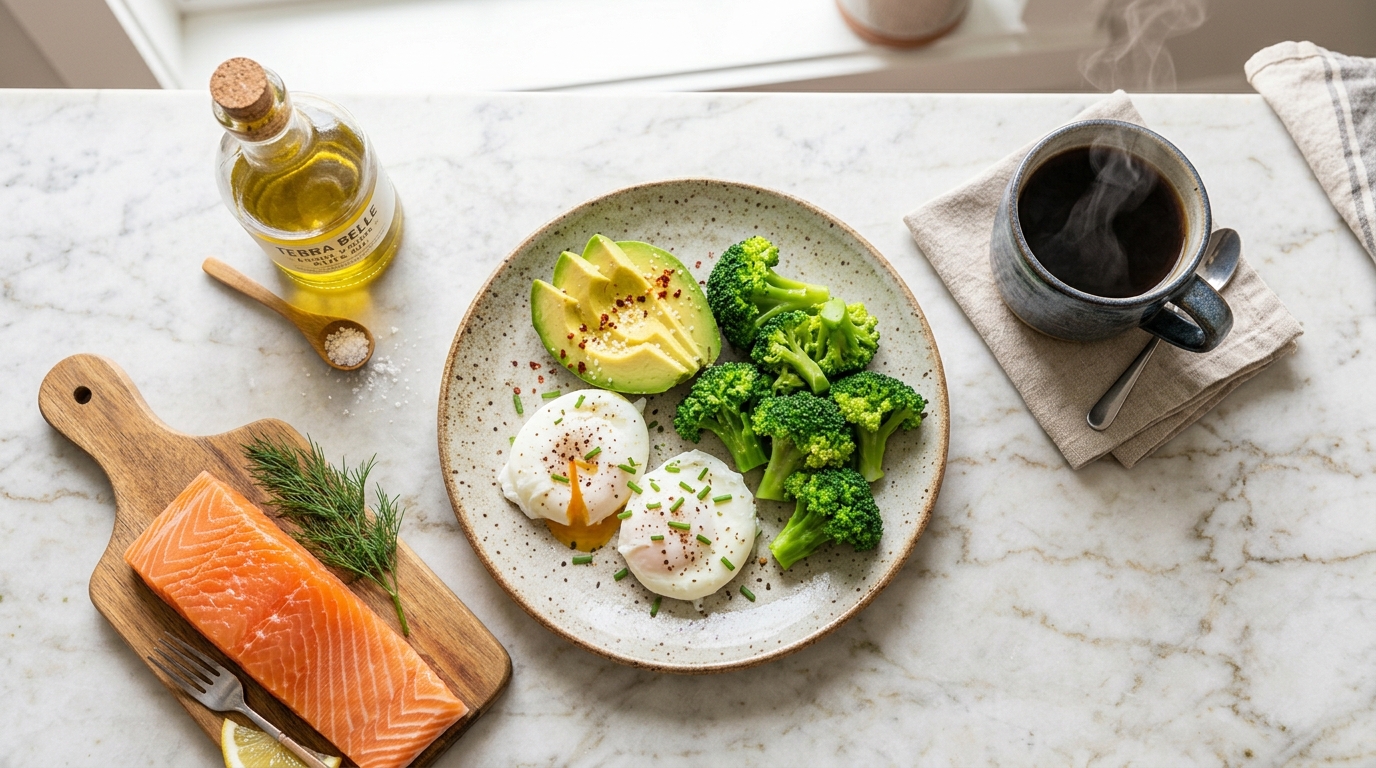
- Eat Dinner Early (Ideally in Daylight): As we saw, the perfect scenario to sleep like a baby is having your last meal before the sun goes down, while there is still natural light. If your schedule doesn’t allow it, at least make sure to close your body’s “kitchen” about 2 or 3 hours before going to bed. A working stomach at night raises your body temperature and blocks deep rest.
- Keep Your Schedule (Even on Weekends): Your circadian rhythm doesn’t care if it’s Tuesday or Sunday. If you stay up late on the weekend and wake up at noon, you’ll have terrible “jet lag” on Monday. Try not to vary your sleep schedule by more than an hour on your days off.
The bottom line? Start by listening to your conductor. Expose yourself to sunlight in the morning, eat dinner while there is still natural light, try to go to bed before 11:00 pm, and avoid bright screens at night. Your body will thank you by giving you back energy levels you didn’t know you had!
Bibliographic and Scientific References
1. Circadian Rhythms Fact Sheet (NIGMS – National Institutes of Health)
- Description: An official, comprehensive guide from the US National Institute of General Medical Sciences. It scientifically explains what biological clocks are, the crucial role of light and darkness, and how they influence the sleep-wake cycle, hormone release (like melatonin and cortisol), and metabolic processes.
- URL:
https://www.nigms.nih.gov/education/fact-sheets/Pages/circadian-rhythms.aspx
2. Blue light has a dark side (Harvard Medical School)
- Description: An article backed by Harvard Medical School detailing how artificial light—specifically the blue light emitted by phones and screens—suppresses melatonin secretion at night, severely disrupting the circadian rhythm and tricking the brain into thinking it is daytime.
- URL:
https://www.health.harvard.edu/staying-healthy/blue-light-has-a-dark-side
3. Chrononutrition: Why When You Eat Matters (National Library of Medicine / PubMed)
- Description: A scientific review on “chrononutrition,” the study of how meal timing affects our health. It documents how late-night eating (when natural digestion has slowed down) impairs glucose tolerance, promotes fat storage, and confuses the peripheral clocks of our metabolism.
- URL:
https://www.ncbi.nlm.nih.gov/pmc/articles/PMC6489397/
4. How Light Affects Circadian Rhythms (CDC – Centers for Disease Control and Prevention)
- Description: A resource from the CDC explaining how bright light exposure in the morning is crucial for alertness, and how staying up late or working night shifts (circadian misalignment) elevates stress levels and negatively impacts overall health.
- URL:
https://www.cdc.gov/niosh/emres/longhourstraining/light.html
Medical Disclaimer: The information contained in this article by Caloritrack (a product of KAI STUDIOS, S.A.S.) is strictly educational and informational. While we encourage empowerment through knowledge, neither Caloritrack nor KAI STUDIOS, S.A.S. acts as a medical entity. This content does not substitute in any way the advice, diagnosis, or treatment of a qualified medical professional. Every body is unique; always consult your primary care doctor or specialist before making significant changes to your diet, routines, or lifestyle.