



The Fall of the Pyramid: The Return to Ancestral Nutrition
The Day History Proved Us Right
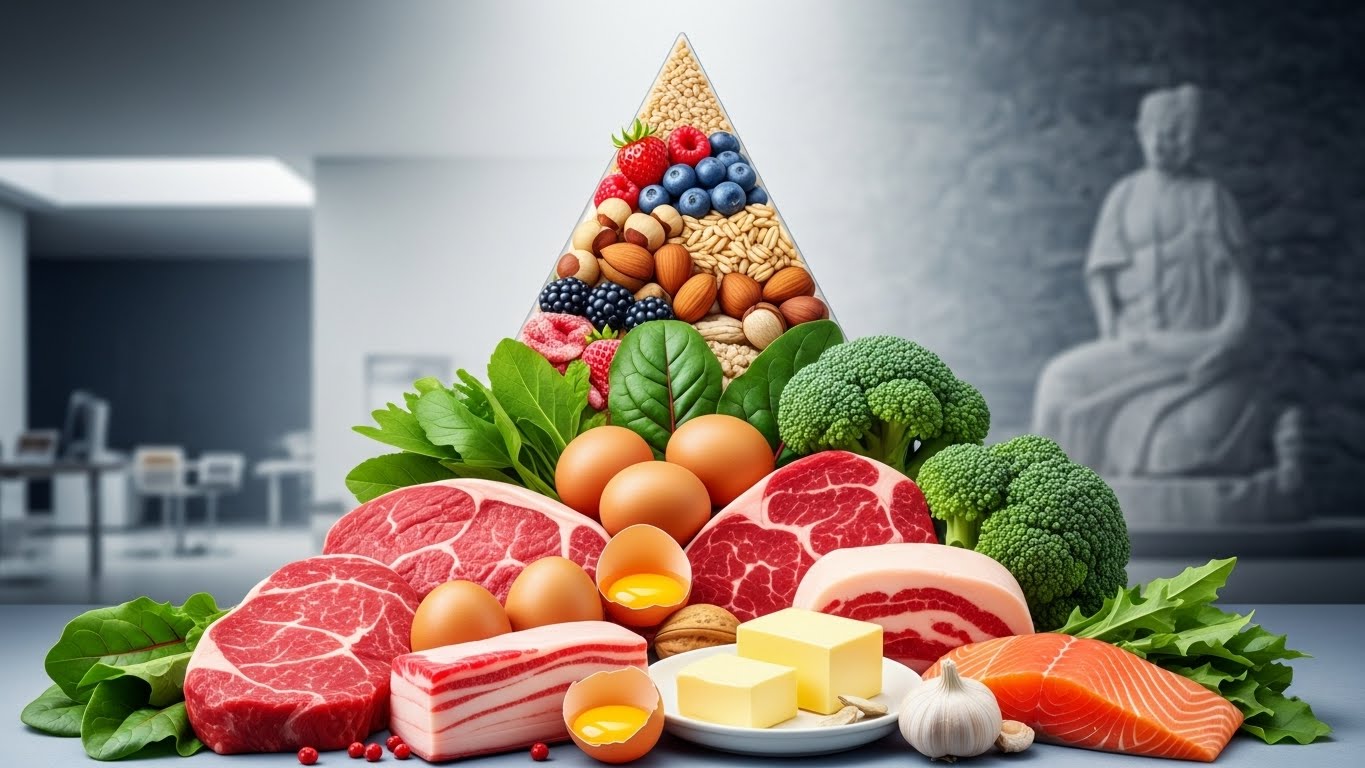
For decades, looking at the official food pyramid was like staring at a monument to metabolic disease. The wide base, stuffed with cereals, breads, and pastas, invited us to consume refined carbohydrates as if they were oxygen. Meanwhile, at the peak—small and restricted—lived the foods that built our brains: animal fats, red meat, and eggs.
But reality always prevails. A few days ago, in a historic shift, the FDA and USDA tacitly admitted what the independent scientific community has been screaming for years: we were wrong.
The “new” pyramid has flipped the script. But at Caloritrack, we know this isn’t news; it’s a vindication.
The 50-Year Anomaly vs. 2 Million Years of Evolution
To understand the magnitude of this shift, we must look at the clock of human history. Humans (Homo Sapiens) have thrived on this planet for approximately 2 million years. What was our fuel?
- Hunting: Dense animal protein and fat.
- Gathering: Seasonal plants, roots, berries.
Our DNA was forged in the absence of industrial agriculture. Yet, in the last 50 years—a mere blink in our evolutionary history—an anomaly occurred. Starting in the 70s and 80s, dietary guidelines were introduced that demonized saturated fats based on flawed observational science and, above all, economic interests.
The Double Agenda: Health vs. Profitability
Why were we told that grains should be the foundation? The answer is uncomfortable but necessary: Economics. Grains (wheat, corn, soy) are:
- Cheap to produce on a massive scale.
- Easy to store (long shelf life).
- Extremely profitable for the processed food industry.
Conversely, grass-fed meat, fresh eggs, and real butter are expensive, perishable, and hard to “brand” as intellectual property. Industry and political lobbies created a narrative where cheap was “healthy” and ancestral was “dangerous.” The result was a global epidemic of obesity, type 2 diabetes, and chronic inflammation.
The Return of the King: Why Fat Returns to the Base
The new nutritional structure, which now aligns with the Caloritrack philosophy, sets things right:
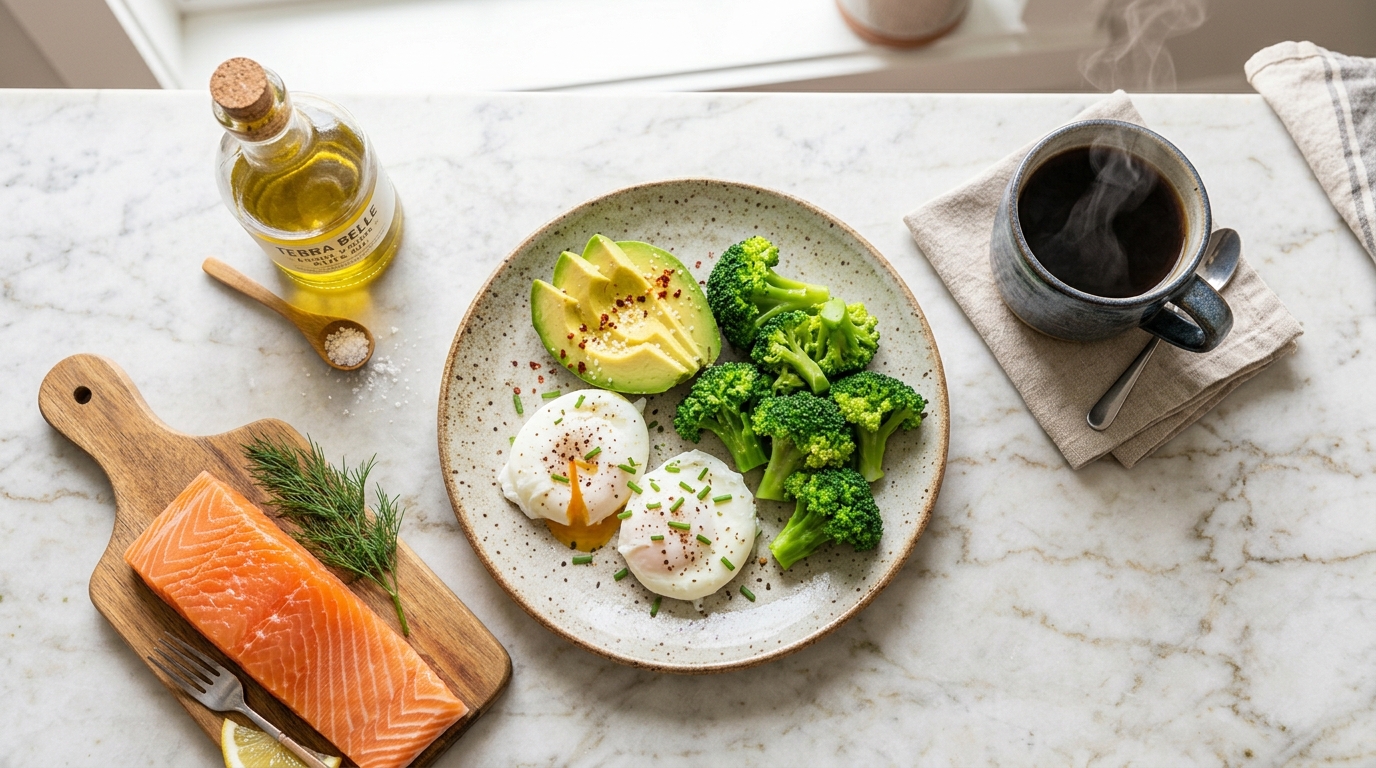
- Eggs and Butter: They are no longer the villains. They are dense sources of fat-soluble vitamins (A, D, K2) and choline, essential for the brain.
- Red Meat: Far from causing disease, it is the most bioavailable source of iron, B12, zinc, and complete protein. It is the building block of our tissues.
- Healthy Fats (Tallow, Avocado, Olive Oil): These are our metabolism’s preferred fuel, providing real satiety and hormonal stability.
Grains: From the Throne to Oblivion
In this historic correction, grains and refined flours move to their rightful place: the minimum or total exclusion. Biologically, we have no essential need for exogenous carbohydrates, let alone inflammatory flours.
Conclusion: Nature’s Wisdom
True wisdom lies in living in accordance with natural laws, not against them. Trying to cheat our biology with lab-made products and pyramids designed by political committees was a mistake we paid for with our health.
Today, we celebrate that official science has stopped fighting reality. But you don’t need to wait for a government to tell you what to eat; your body has known it for 2 million years.
At Caloritrack, we don’t follow trends; we follow evolutionary evidence. That is why our nutrition plans and recipes are already designed around this “new” pyramid. We didn’t have to change a thing after the official announcement because we always knew: real health isn’t negotiated in an office; it’s dictated by our genes.
It’s time to stop eating like we were told in the 80s and start nourishing ourselves as we always should have.
👉 Ready to take back control? Download Caloritrack and discover how real food transforms your life.
Medical Disclaimer: The information contained in this article by Caloritrack (a product of KAI STUDIOS, S.A.S.) is strictly educational and informational. While we encourage empowerment through knowledge, neither Caloritrack nor KAI STUDIOS, S.A.S. acts as a medical entity. This content does not substitute in any way the advice, diagnosis, or treatment of a qualified medical professional. Every body is unique; always consult your primary care doctor or specialist before making significant changes to your diet, routines, or lifestyle.