
Take the next step
Carry the full power of our ecosystem in your pocket. Transform your habits and reach your goals today, right from your iPhone.

Or scan the code to install:

Carry the full power of our ecosystem in your pocket. Transform your habits and reach your goals today, right from your iPhone.
Or scan the code to install:


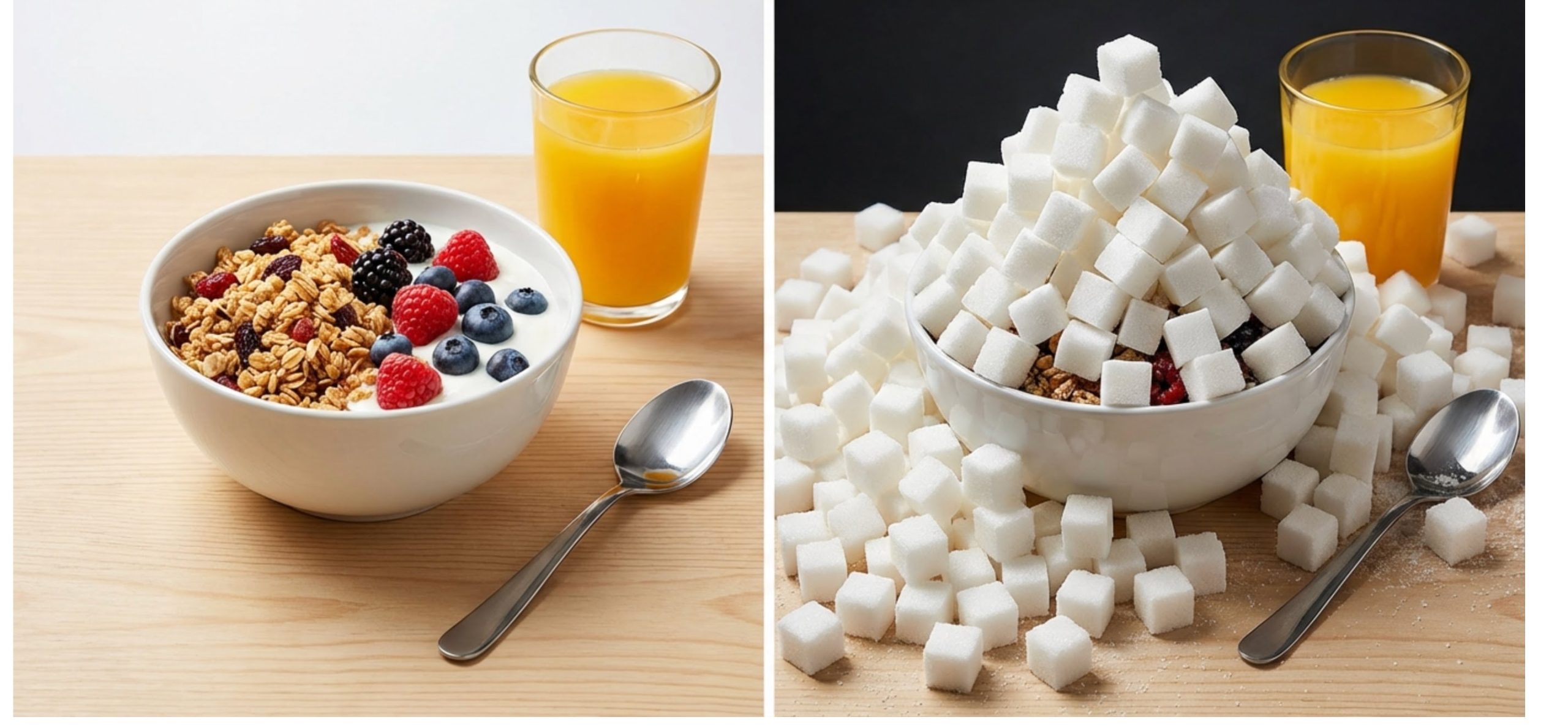
The ubiquity of sugar in the modern food supply represents one of the most formidable public health challenges of the 21st century. The epidemiological and nutritional transition of recent decades has drastically reconfigured global consumption patterns. The advent and proliferation of ultra-processed foods (UPFs), which today constitute a majority fraction of caloric intake in Western diets (reaching up to 57.9% of total energy in populations such as the American one), has transformed sugar from a scarce and seasonal commodity to an inescapable metabolic constant.1 This systematic transition has triggered parallel and interconnected epidemics of obesity, insulin resistance, non-alcoholic fatty liver disease (NAFLD), and cardiovascular diseases.3
However, scientific scrutiny reveals that sugar is not a biologically monolithic entity, nor is it an absolute poison in a vacuum. Its physiological impact is intrinsically linked to a multitude of variables: its three-dimensional molecular structure (the divergence between glucose and fructose), its form of presentation and natural packaging (isolated in aqueous solutions versus encapsulated in a fibrous cellular matrix), and critically, the metabolic state and energy demand of the host (the chronically sedentary individual versus the high-performance athlete).5 This report exhaustively and Nuancedly details the biochemical mechanisms of the metabolism of different sugars, the silent impact of hidden carbohydrates on the intestinal microbiota and neurobiological reward circuits, as well as the complex regulatory and commercial strategies surrounding their labeling, with special emphasis on the legal framework of the Mexican Official Standard NOM-051. The guiding objective is to generate informed awareness, far from dogmas, that allows discerning when a simple carbohydrate acts as a pathological burden and when it can function as an ergogenic tool of precision.
To understand how carbohydrates interact with human physiology, it is imperative to master the concept of the Glycemic Index (GI). This parameter is a fundamental, clinically standardized metric that quantifies the temporal impact of carbohydrates on systemic glucose homeostasis. It is formally defined as the measure of the increase in the area under the curve of blood glucose concentration during the two hours following the consumption of a food containing a standardized amount of available carbohydrates (usually 50 grams).9 This increase is compared as a percentage with the consumption of an equivalent amount of a reference carbohydrate, which is typically pure glucose or white bread, to which a maximum baseline value of 100 is assigned.9
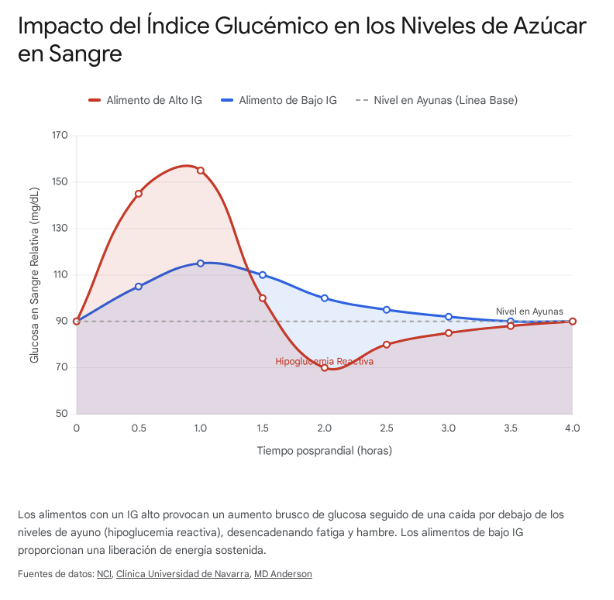
When an individual ingests foods classified with a high GI (generally those exceeding a value of 70 on the scale, such as maltodextrin, glucose syrups, or highly refined flours), the processes of enzymatic digestion and absorption through the intestinal mucosa occur at breakneck speed.9 This causes a massive influx of monosaccharides into the bloodstream, resulting in a rapid, acute, and transient increase in systemic glucose, a clinical state known as postprandial hyperglycemia.9
Physiologically, this acute glucose spike is instantly detected by the beta cells of the islets of Langerhans in the pancreas. As a defense mechanism to restore normoglycemia (thus avoiding glucose toxicity in blood vessels and endothelial damage), the pancreas triggers an insulin secretory response directly proportional to the aggressiveness of the glycemic stimulus.11 Insulin acts as a molecular key that binds to cellular receptors, allowing the translocation of glucose transporters to the cell membrane to facilitate the uptake of circulating sugar by peripheral tissues, primarily adipose tissue and resting skeletal muscle.8
The underlying and chronic problem of repeated consumption of high-GI foods in sedentary populations lies in the phenomenon of insulin overcompensation. The massive and sudden release of insulin often turns out to be excessive for the actual amount of energy the body needs at that moment. This hormone withdraws glucose from the bloodstream so abruptly and efficiently that blood sugar levels fall below the initial fasting baseline, causing a mild clinical state known as reactive hypoglycemia.12
This glycemic “valley,” which usually occurs a few hours after the ingestion of the ultra-processed product, is interpreted by the central nervous system as a signal of imminent threat to survival. As a result, neuroglycopenic and autonomic symptoms are triggered: profound lethargy, irritability, lack of concentration, and, most perniciously, a strong impulsive desire (craving) to consume more fast-absorbing carbohydrates to rescue energy levels.12 A vicious cycle of hyperglycemic spikes and hypoglycemic crashes is thus established throughout the day. In the long term, chronic exposure to these hyperinsulinemias wears down the sensitivity of cellular receptors, paving the direct path to insulin resistance, metabolic syndrome, and type 2 diabetes mellitus.12
It is a common mistake to consider that the glycemic index of a food is an immutable number printed on its matrix. The biochemical reality is that the glycemic impact is highly dynamic and can vary drastically due to multiple structural and processing factors 15:
One of the deepest misunderstandings in public nutrition concerns the metabolic equivalence of sugars. While glucose is the universal energy substrate that virtually all cells in the human body are designed to use directly, fructose holds a dramatically different and significantly more insidious metabolic fate when extracted from its plant matrix and consumed in quantities that defy our evolution.17 Fructose, discovered in 1894 by chemist Augustin-Pierre Dubrunfaut, is the predominant sugar in fruits and honey, but in recent decades, the industrial introduction of High Fructose Corn Syrup (HFCS) has flooded the food supply with concentrated doses of this monosaccharide.18
The fundamental biological disparity between glucose and fructose lies in the enzymatic control mechanisms during their entry into the cell. Fructose metabolism occurs almost entirely confined to the liver.5
At the hepatocyte level (the main liver cell), the glucose pathway is closely guarded. When glucose enters the cell through GLUT transporters, it must undergo glycolysis to produce energy (ATP). A critical step in this pathway is mediated by the enzyme phosphofructokinase. This enzyme acts as a highly intelligent “toll” or negative feedback traffic light: if the liver cell already possesses enough energy (high levels of ATP and citrate), the enzyme stops the flow of glucose, preventing the cell from being flooded with metabolic intermediates.17
Unlike regulated glucose, fructose enters the hepatocyte like an avalanche, completely bypassing this primary control step.17 Once inside, the enzyme fructokinase avidly and swiftly phosphorylates the molecule, transforming it into fructose-1-phosphate (F1P).18 Subsequently, F1P is rapidly catalyzed by the enzyme aldolase B, fragmenting into dihydroxyacetone-phosphate (DHAP) and glyceraldehyde.19 Through the action of triokinase, glyceraldehyde is converted to glyceraldehyde-3-phosphate (G3P).19 Because it lacks the shut-off mechanism that regulates glucose, an overload of fructose in the diet (for example, by ingesting large amounts of soda sweetened with HFCS or agave nectar beverages) uncontrollably floods hepatic mitochondria with two-atom carbon precursors, primarily Acetyl-CoA.17
This mitochondrial deluge of Acetyl-CoA triggered by fructose drastically alters cellular balance. The excess carbons vigorously activate potent lipogenic transcription factors in the liver nucleus, notably SREBP1c (Sterol Regulatory Element-Binding Protein 1c) and ChREBP (Carbohydrate-Responsive Element-Binding Protein).17
The orchestrated activation of these factors vigorously stimulates every enzymatic step of a fundamental pathological route known as De Novo Lipogenesis (DNL).17 DNL is the metabolic pathway through which the body directly converts massive carbohydrate surpluses into fatty acids.18 In this process, the enzyme ATP Citrate Lyase (ACLY) plays a hinge role, taking citrate (a metabolite derived from fructose conversion) and transforming it back into cytosolic Acetyl-CoA, the primary building block that will be inexorably assembled and packaged into triglycerides (fat droplets).18
Therefore, high-dose fructose relentlessly promotes the deposition of intrahepatic lipids, fueling the development of non-alcoholic fatty liver disease (NAFLD) and exacerbating insulin resistance by interfering with intracellular signaling through the accumulation of diacylglycerols and the detrimental activation of protein kinase C (PKC).5 Recent studies further suggest that the gut microbiota plays a facilitating role by providing fructose-derived carbons directly to the liver independently of ACLY, creating a double front of lipogenic induction.18
Parallel to fat accumulation, the initial rampant phosphorylation by fructokinase causes an acute and dramatic depletion of cellular ATP reservoirs. This local energy crisis elevates the levels of ADP and inosine monophosphate (IMP), metabolites that rapidly degrade along their catabolic pathway resulting in a massive synthesis of intracellular uric acid.17 The induced hyperuricemia is not only a risk factor for gout and vascular dysfunctions, but internally promotes steatosis by generating severe oxidative stress in mitochondria and the endoplasmic reticulum.17 The metabolism of fructose directly generates Reactive Oxygen Species (ROS), amplifying tissue inflammation and consolidating the cascade of liver damage.17 In summary, consuming highly refined fructose not only implies a caloric surplus, but the induction of specific metabolic toxicity that radically alters cellular functioning.
A comprehensive metabolic analysis demonstrates that the deleterious effect of carbohydrates does not emanate exclusively from their intrinsic chemical structure, but predominantly from the anatomical vehicle in which they are presented; that is, the “food matrix.”21
There is a deep physiological schism between the assimilation of sugars trapped in the intact tissue of a whole apple versus the ingestion of the same net amount of monosaccharides diluted in a glass of processed apple juice or a carbonated beverage.7 Whole foods, evolved through botanical lineage, are characterized by a robust cellular architecture that encapsulates organic nutrients and water within a complex three-dimensional network of dietary fiber, comprising both soluble (pectins, gums) and insoluble (cellulose, lignin) components.12
When an individual consumes a piece of whole fruit, the primary mechanical effort of chewing is barely the first level of delay. In the digestive tract, the structural integrity of the botanical cellular matrix and the viscosity induced by soluble fiber act together as a formidable physical barrier.14 This matrix sequesters sugars, severely limiting the spatial access of amylolytic digestive enzymes and preventing monosaccharides from coming into free and massive contact with the absorptive mucosa of the small intestine.11 This physiological sequestration dramatically delays both the kinetics of digestion and the flow rate of glucose and fructose absorption into the portal vein.16
By modulating the entry of sugar into the bloodstream, fiber prevents hepatic clearance thresholds from being exceeded, neutralizing the need for an acute defensive hyperinsulinemia.12 Furthermore, this gastric slowing and the physical volume occupied by the intact matrix exert a strong stimulation on stomach mechanoreceptors and promote greater secretion of enteroendocrine satiety hormones (such as peptide YY and glucagon-like peptide-1), which robustly prevents compensatory overeating in the subsequent meal.7 Notably, research in Ussing chambers with human duodenal biopsies has shown that a diet low in fiber but high in simple sugars destroys duodenal microbial diversity and correlates directly with an alarming pathological increase in intestinal paracellular permeability to markers such as FITC-dextran, opening the door to systemic toxins.14
Conversely, the so-called “acellular nutrients” characteristic of UPFs—specifically free sugars dissolved in liquid matrices (sugary drinks, industrial nectars, sodas, sweetened teas, and poorly formulated recovery drinks)—absolutely lack the protection of fiber.7 These hypertonic aqueous solutions exhibit precipitous gastric emptying rates.11 They pass through the stomach almost without delay and besiege the enterocytes of the proximal jejunum, inducing violent absorptions that trigger the hepatic perturbations of de novo lipogenesis explained earlier, without generating the essential hormonal and mechanical satiety signals in the brain.7 The consumer of liquid sugars thus suffers the dual punishment of a caloric tsunami coupled with persistent underlying hunger, consolidating an aberrant pattern where the body is simultaneously hypercaloric at the substrate level but unsatisfied at the hypothalamic satiety level.4 This compensatory adjustment failure reliably explains why epidemiological evidence almost univocally links the intake of liquid calories to an increased risk of cardiometabolic morbidity.7
Perhaps the most distorted narrative in contemporary nutritional dogmas is the systematic omission of the recipient’s physiological context. A simple carbohydrate, which proves toxic, inflammatory, and lipogenic in the body of an individual confined to the static nature of office life, can magically transform into an essential, lifesaving, and neuroprotective ergogenic substrate in the biology of an endurance athlete crossing the limits of physical exhaustion.6
In individuals with a predominantly inactive lifestyle, the muscular and hepatic glycogen stores (the storage polymers of glucose) operate in a perpetual state of maximum saturation.24 In the absence of vigorous and recurrent muscle contraction that mobilizes and empties these intramuscular stores, there is no physiological “sink demand” to assimilate the excess energy.
When this saturated organism consumes refined added sugars, the avalanche of carbohydrates finds the storage doors closed. The surplus glucose must remain circulating, which triggers a persistent defensive hyperinsulinemia that actively blocks the enzymes responsible for the beta-oxidation of fatty acids (the “burning” of fats).5 Forced to manage residual sugar toxicity, the liver resorts to the only remaining evolutionary alternative: packaging the energy in the form of fat.18 In this scenario, sugar acts as the quintessence of “empty calories”: vectors of massive energy completely devoid of the micronutrients, phytochemicals, and fiber necessary for cellular homeostasis, generating clinical paradoxes such as “Normal Weight Obesity.”4 Patients under this diagnosis present a phenotype where their Body Mass Index (BMI) appears clinically healthy, but they hide deep deposits of ectopic visceral fat, silent insulin resistance, and highly atherogenic lipid profiles.14
Even for the portion of the population that engages in physical activity recreationally (for example, individuals who sporadically jog 45 minutes a day or attend light gym routines), the intake of fast sugars peri-workout is rarely justified.26 Endogenous glycogen stores are perfectly capable of sustaining low to moderate-intensity exertion sessions of up to 60 to 90 minutes without the need for exogenous supplementation. Ingesting massive bottles of “isotonic drinks” loaded with 30 grams of sucrose or HFCS to accompany a half-hour walk results in a metabolic fallacy that quickly negates the caloric deficit intended by the activity and perpetuates post-workout insulin crashes.26
Cellular architecture and the laws of cellular metabolism are radically inverted during the practice of high-intensity sports and extreme endurance (road cyclists in the Tour de France, ultramarathon runners, triathletes in the Ironman distance).6 Here, refined sugar ceases to be a burden and stands as a critical tool to evade the functional collapse colloquially known as “bonking” or “hitting the wall” (acute hypoglycemia).
During vigorous muscle contraction, the sarcoplasm experiences mechanical stress and severe depletion of ATP reserves, which exponentially elevates intracellular AMP levels.28 This energy deficit ignites fundamental enzymatic sensors such as AMP-activated protein kinase (AMPK) and calcium/calmodulin-dependent signaling pathways like CAMKII.28 These master enzymes inactivate inhibitors like TBC1D1 and TBC1D4, precipitating a massive mobilization of vesicles containing the glucose transporter GLUT4.28
The fascinating and crucial aspect is that this translocation of GLUT4 to the T-tubules and the sarcolemma occurs through molecular mechanisms that are totally independent of insulin.8 Active skeletal muscle becomes a metabolic sponge, acquiring the ability to suck glucose from the bloodstream without requiring intervention from the pancreas.28 In the heat of competition, when hepatic and muscular glycogen is dangerously waning after hours of work, the acute intake of highly pure assimilable carbohydrates, such as fructose-free dextrose (pure glucose), provides an immediate and instantaneous flow of ATP to the muscle fibers.27 A pure glucose gel penetrates the upper intestine and injects energy into the central nervous system (which depends almost exclusively on circulating glucose) and muscle tissue in a matter of a few minutes, rescuing the athlete from exhaustion.
The Holy Grail of Sports Nutrition: The Glucose-Fructose Synergy Although pure glucose is the perfect lifesaver molecule in a crisis, if an athlete seeks to maximize continuous energy assimilation throughout a five-hour event, they hit a biological bottleneck: the absorption limitation of the intestine. The intestinal transport protein responsible for absorbing glucose, SGLT1 (Sodium-Glucose Cotransporter 1), has a saturation capacity.27 This maximum threshold is reached processing around 1 gram per minute, that is, approximately 60 grams of glucose per hour.27 Ingesting higher amounts of pure glucose does not increase energy availability; on the contrary, excess carbohydrates stagnate and ferment osmotically in the lumen of the ileum and colon, causing gastrointestinal disasters, cramps, and acute diarrhea in the middle of a competition.27
It is at this precise point that contemporary nutrition has introduced the science of multiple transporters. Unlike glucose, the luminal absorption of fructose does not depend on the saturated SGLT1 but is mediated by an independent, low-affinity but high-capacity transporter, GLUT5.27
By strategically ingesting a polymeric matrix that combines both substrates, usually maltodextrin or glucose crossed with fructose in a rigorous physiological proportion (historically 2:1, but recent cutting-edge studies point to an even more optimized ratio of 1:0.8), the athlete bypasses the gastrointestinal bottleneck.27 This dual co-ingestion concurrently activates multiple transport pathways, skyrocketing the oxidation rates of exogenous carbohydrates from a restrictive 60 grams/hour to astounding amounts ranging between 90 and 120 grams/hour.27
The result is a constant and overwhelming supply of energy substrate, which significantly delays the depletion of endogenous glycogen, drastically reduces markers of gastrointestinal stress, and sustains much higher biomechanical power output in the final phase of endurance events.27 Moreover, this molecular alliance does not conclude after crossing the finish line; in the critical post-exercise phase, fructose, because its hepatic metabolism is obligate and inevitable, is preferentially redirected to rapidly rebuild the vital glycogen stores of the liver, while glucose voraciously replenishes the muscle sarcoplasm.6 Thus, under the paradigm of exhausting sport, substances that are vectors of pathology at an office desk mutate into refined tactical tools for survival and athletic supremacy.
The destructive reverberations of excess refined carbohydrates in the contemporary diet radiate into much more insidious domains than simple insulin alteration or triglyceride accumulation. Free sugars, especially when packaged in ultra-processed matrices lacking prebiotics, act as massive corrupting agents that destabilize two of the most intricate and critical systems of the human body: the ecology of the intestinal microbiota and the deep neurobiological reward circuits that dictate our behavior.2
The human gastrointestinal tract is not a simple inert processing tube; it is a colossal bioreactor inhabited by trillions of interdependent microorganisms that regulate everything from the maturation of our immune system to the synthesis of essential endogenous neurotransmitters.41 The so-called “Western Diet,” defined by high energy loads of free acellular sugars and saturated fats, and marked by an almost total scarcity of botanical fiber and polyphenols, exerts a perverse Darwinian selective pressure on this delicate ecological colony.14
Microbial genomic research demonstrates that a torrential flow of simple sugars, especially those that exceed the absorption capacity of the small intestine and spill into more distal sections, drastically alters the bacterial hierarchy.14 Hyperglycemic diets cause a catastrophic reduction in alpha diversity (the total variety of bacterial species) and a plummeting abundance of the phylum Bacteroidetes (particularly the genus Bacteroides).14 These beneficial bacteria, whose evolutionary function is the laborious enzymatic degradation of complex carbohydrates (fiber), starve to death in an environment flooded with simple sugars. Their decline is severe, as Bacteroides species are primarily responsible for synthesizing short-chain fatty acids (such as butyrate) and immunoregulatory effector molecules that attenuate inflammation and maintain the robust integrity of the mucosal enterocyte barrier.14
Parallel to this extinction of protective microorganisms, the abundance of glucose and fructose promotes an explosive, almost neoplastic population bloom of pathogenic or opportunistic bacteria belonging to the phylum Proteobacteria, and in particular, strains of the family Enterobacteriaceae (which includes infamous pathogens like certain variants of E. coli and facultative anaerobic lineages like Streptococcus sp.).14 These microorganisms have specialized phosphotransferase transport systems (PTS) embedded in their genome, ultra-efficient enzymatic motors that allow them to capture, internalize, and ferment monosaccharides at astonishing speeds in the hostile and turbulent environment of the upper intestine.14 Armed with this unfair metabolic advantage, they violently displace slower and beneficial bacterial communities, completely altering the phenotype of the small intestine.14
The proliferation of this aberrant flora generates a systemic catastrophe: endotoxemia. Members of the Enterobacteriaceae family carry highly immunogenic molecules called lipopolysaccharides (LPS) or endotoxins embedded in their outer cell walls.14 As these bacteria multiply, the luminal concentration of LPS skyrockets. The intestinal epithelium reacts aggressively upon detecting these massive bacterial antigens through Toll-like receptors, inducing enterocytes to secrete high levels of Interleukin 8 (IL-8) and other potent chemotactic factors.14
This local proinflammatory storm of IL-8 attacks and transmutes the molecular architecture of the “tight junctions,” the proteins that hermetically seal adjacent intestinal cells.14 As a direct result, the epithelium collapses and the intestinal barrier loses its selective impermeability (a pathological phenomenon validated in ex vivo models by measuring alterations in paracellular flow of macromolecules like FITC-dextran in Ussing chambers).14 Through the microscopic fissures of this “leaky gut,” bacterial lipopolysaccharides (LPS) manage to cross the mucosal border and leak massively into the systemic blood circulation.14
This chronic and concealed state, coined in biomedical literature as metabolic endotoxemia, is the primary pathogenic route that consolidates the state of chronic low-grade systemic inflammation. It is the missing link that physiologically connects diets high in free sugars with dysfunctions far from the gastric tract, such as the rapid development of cellular insulin resistance syndromes, adipose tissue hypertrophy, steatohepatitis, and severe peripheral neurodegenerative alterations, even in subjects of apparently stable and normative weight.14
In conjunction with the devastation of the microbiome, the Ultra-Processed Food (UPF) industry has achieved a parallel bioengineering feat: formulating products with hedonic profiles, unnatural concentrations of refined sugars, hydrogenated fats, and sodium loads that relentlessly exploit and breach the underlying vulnerabilities of our ancestral evolutionary biology.2 Humans developed brain systems oriented toward the relentless search for scarce energy sources to ensure survival; these systems are not equipped to curb the industrialized hyperpalatability of the 21st century.
Contemporary neurosciences reveal that the copious ingestion of concentrated sugars precipitates a massive burst in the release of the neurotransmitter dopamine through the pathways of the brain’s primary reward system, predominantly orchestrated along the projection from the ventral tegmental area (VTA) to the medium spiny receptors of the nucleus accumbens (NAcc).13 Notable studies employing positron emission tomography (PET) at leading research institutions (such as the Max Planck Institute for Metabolism) have illuminated an even more pernicious dynamic: the reward feedback loop generated by sugar consumption is actually biphasic.40
The first and highly potent “hit” or dopaminergic injection is triggered almost instantaneously and reflexively from the very moment sweetened molecules come into electrochemical contact with the gustatory receptors of the palate, dramatically pre-activating neural pathways long before systemic caloric metabolism begins.40 Retrospectively and subsequently, a second diffuse wave of dopaminergic secretion occurs, retroactively commanded by the vagal-intestinal axis when luminal sensors detect that glucose has finally penetrated the gastric vascular bed.40
This double neurochemical cascade, repeated chronically through daily consumption, deeply imitates and disturbingly mimics the alterations observed under pharmacological substance abuse.43 Faced with the repetitive and unnatural dopaminergic bombardment of UPFs, the brain, in a state of chronic hyperstimulation, tries to shield itself and defend its homeostasis by executing a down-regulation mechanism of its own systems, gradually attenuating and desensitizing the availability of D2 subtype dopaminergic receptors throughout the striatal circuits and depleting the connectivity of the prefrontal cortex responsible for decision-making.13
This maladaptive neuroplastic adaptation condemns the individual to a tragic cycle. The desensitized brain demands increasingly aggressive hedonic thresholds—exponentially larger amounts of sugar or sharper flavor profiles—simply to reach the same emotional modulation baseline, experience an ephemeral level of satisfaction, or appease underlying anguish.13 The resulting psychiatric symptomatology exhibits an alarming and clinically validated parallelism (using diagnostic instruments such as the Yale Food Addiction Scale or YFAS) with the DSM-5 typified criteria for chemical substance use disorders: compulsive binge eating, subjective inability to stop consumption despite conscious physical deterioration, mental rumination and uncontrollable cravings (pathological craving) driven by environmental stimuli (cues), and chronic emotional distress, abrupt mood swings, and physical lethargy (withdrawal syndrome) when access to junk diet is abruptly interrupted.2 Particularly during the crucial periods of childhood, early and rampant exposure to these UPFs irreversibly remodels striatal circuits, cementing neural footprints and forging architectural pathways predisposed to chronic addictive behavior that will stubbornly endure throughout adulthood.2
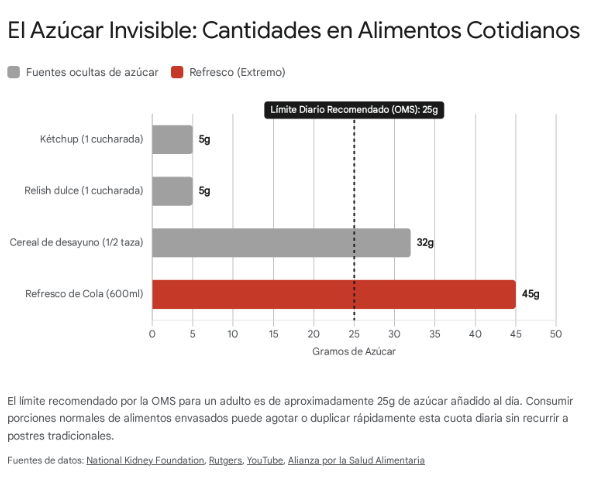
The most complex link in the current public health crusade against harmful sugar consumption does not lie in preventing a patient from acquiring a large bar of baking chocolate or a portion of ice cream; those products are consumed from the full consciousness and choice of a hedonic whim. The devastating and silent core of the crisis is that a vast majority of the population daily ingests dozens of spoons of refined sugars insidiously dissolved in foods considered “essential,” “savory,” or worse still, those falsely coated with the deceptive varnish of “healthy nutrition” in supermarket aisles.
The level of intrusion is structural. Data from the National Health and Nutrition Examination Survey reveal the harsh magnitude of this phenomenon in North America: UPFs are the direct conduit through which an astonishing 89.7% of all added sugars consumed in the national diet enter, a monstrous percentage that crushes the miniscule 8.7% of pure sugars added domestically in culinary recipes prepared from scratch.4 The food processing industry does not rely on sugar out of caloric altruism, but wields it militarily as a multifunctional, economical, and dopaminergic tool; it is used mercilessly to prolong shelf-life margins as a desiccant preservative, as a silky texture modifying agent, as a cheap volume expander, and to amalgamate artificial flavor profiles. This has resulted in the widespread invasion of products that, in the historical home kitchen, would never have seen a grain of sucrose.25
Confronted by the forcefulness of independent scientific evidence, various global health agencies and governmental coalitions have been forced to legislate the asymmetric flow of information to the consumer and implement severe mandatory regulatory measures, primarily directing their efforts to establish Front-of-Pack Labeling (FOPL) protocols.57
In the Mexican Republic—an epicenter of the global metabolic epidemic that holds the title of being the nation with one of the most unrestrained chronic per capita consumption rates of soft drinks globally (data shows averages of 163 liters per person per year, 40% more than the US records of 118 liters) 56—the crisis prompted strong governmental intervention. Supported by the amendment of Article 212 of the General Health Law, government efforts resulted in the strict and mandatory promulgation of the historic Modification to the Official Mexican Standard NOM-051-SCFI/SSA1-2010.59
This ambitious regulatory system revolutionized nutritional scrutiny by implementing a disruptive graphic model centered on octagonal warning seals, designed with standardized black chromatics that operate as an instant visual “stop”.59 Under gradual but rigorous criteria in its phases (limiting 275 kilocalories per 100g for solids, strict profiles where free sugar cannot exceed 10% of total energy, as well as strict limits for sodium and saturated trans fats), these badges bluntly alert through the legends “EXCESS SUGARS”, “EXCESS CALORIES” and “EXCESS SODIUM”.59 As an additional mechanism of generational safeguard, the NOM-051 regulation introduces unprecedented parallel mandates for pediatric deterrence: if the formulated profile of the product surreptitiously adds synthetic chemical caffeine or artificial sweetener substitutes, the wrapper must display gigantic precautionary boxes imperatively declaring “CONTAINS SWEETENERS, NOT RECOMMENDED FOR CHILDREN”.61 At the level of population efficiency, scrutinies and surveys such as ENSANUT demonstrated broad benefits: 74% of the population perceived the directive favorably, and initial research validates the forcefulness of the FOPL seals, hypothetically reflecting in trials a net suppression of 120 kilocalories in general daily per capita intake and astounding contractions in the specific purchase frequency of ultra-processed sugary drinks and sodas.57
However, the immense block of lobbying and pressure from the international food oligopoly has not ceased and has mapped out complex and ingenious maneuvers to actively weaken, hinder, and dilute the visual scope of these warning directives.61
At a macro-political and legal level, corporations have constantly litigated and successfully managed to repeatedly postpone the final implementation of tightening regulations; a paradigmatic example is the forced postponement of the highly anticipated Phase 3 of NOM-051 tightening (which was due to be established and launched in 2025 heavily limiting crossed supplementary parameters), controversially delayed until January 1st of the distant 2028 due to governmental rulings and corporate blockades.60
On the microscopic and material front of the supermarket, brands exploit loopholes and crude ergonomic tricks to visually nullify the label design. By strategically modifying resins and molding packaging in large lines of liquid sugary sodas or dairy products, they prefer to use deliberately spherical or markedly cylindrical containers. These configurations deflect the visual field, forcing the stamping of the bulky octagons and threatening seals on bordering areas, lateral contours, and blind folds of the bottle plastic so that the buyer, frontally and naturally in the rush of the aisle, partially or totally manages to miss them at first glance.61 In a parallel tactical strand, the so-called phenomenon of “deceptive light contrast,” brand strategies audaciously flood large frontal areas with gigantic colors and typography proclaiming “SUGAR-FREE PRODUCT!” or “100% DIETETIC,” but simultaneously enclose in lower gray margins, with virtually microscopic and illegible typography and a deliberate lack of high contrast, the mandatory warnings about the harmful use of sweeteners.61
When despite the obstacles, a motivated consumer becomes proactive and diligently turns the back of the package looking to meticulously decipher the miniscule listing and hierarchy of “ingredients” printed in the nutritional codes of big brands (legally forced to be listed in descending scale of weight by commercial rule) 26, the manufacturer wields its most powerful and indecipherable ruse: the use and chemical partitioning of multiple variants of sugars and derivatives to artificially dilute the apparent weight of the sweet constituent.65 Instead of an immense unified front of “sugar” as the primary and initial caloric agent of a food, the packager deploys five or six synthetic derivatives scattered and randomly disseminated within the last wagon of the list.66 At the base of linguistic engineering and the contemporary grocery industry, there are actively documented more than 70 commercial designations and technocratic synonyms hiddenly used as direct subterfuges to skillfully disguise simple dextrin polymers, maltoses, sucroses, and flows of free refined fructose.65
They are operatively categorized in the following semantic manner:
To truly understand and dissect the molecular magnitude and violent physiological response resulting post-ingestion, it is inescapable to coldly analyze the direct chemical compounds employed daily and poured into our pyramid. Below, a meticulous analytical catalog is detailed structuring the predominant commercial sweeteners, inexorably cataloged by the voracity of their direct trigger on the GI and the aggressive underlying lipogenic accumulation of free circulating fructose, exposing their real biological face against the deceptive labeling of the manufacturer.
| Chemical Name / Commercial Sweetener | Approx. Glycemic Index (GI) | Massive Fructose Percentage | Anatomy and Critical Metabolic Consequence for the Consumer |
| Pure Glucose / Refined Dextrose | 100 | 0% | The gold reference standard with GI 100. Circulates direct and fleeting to the vasculature. Originates absolute chaos and long-term fatigue due to the violent and sharp insulin siege in inactive individuals; paradoxically ideal and indispensable as a highly agile rescue tactic for stellar athletes or patients in deep collapses and emergencies. |
| Maltose (Malt Sugar) | 105 | 0% | A devastating spike. A dimer composed dizzyingly of direct double glucose bonds. Elevates and ignites the blood exponentially even more vertiginously than standardized clinical sugar. Highly modified derivative often extracted in stills from sprouted cereals, beer, and oriental pastry. |
| Concentrated Brown Rice Syrup | 98 | 0% | The ultimate vegetarian deception. Marketed under ecological, zen, or macrobiotic packaging charging unjustified prices. Promoted as “free of harmful fructose,” but it is the direct equivalent of the free ingestion of a barrel of chemical glucose devastating and destroying the fasting thresholds of the sedentary individual and increasing triglycerides. |
| Industrial Maltodextrin | 85 – 105 | 0% | Dangerous shortened molecular polymer, artificial chemical derivative of starch treated by acid hydrolysis. Due to a legislative technical trick, certain regulatory bodies allow it not to be “formally” counted or tabulated as monosaccharides and “free sugar” on labels, even though the saliva enzyme reduces it to glucose molecules that cause identical or worse devastating hyperglycemic earthquakes. Ubiquitously hidden in supplements, powders, and salty soups. |
| Corn Syrup (Basic/Regular) | 90 | 0% | Massive primary component, cheap to produce. Derived and expropriated from the starch of the immense American agricultural machinery. Highly and chronically inflammatory, its massive presence soaks preserves and solid candies in cheap global pastry for its adherent and desiccant resistance properties. |
| Sucrose (White Sugar, Refined, Rustic Panela, Muscovado) | 65 | 50% | The familiar disaccharide of every table, coffee, and pantry on planet Earth. Molecularly formed of exact halves covalently fused (a glucose ring linked by an alpha bond with a fructose molecule). Rapidly elevates pancreatic hormone sieges, and secretly and by drip floods the liver with the quota of half a harmful lipogenic battalion derived purely from the constant fructose bond of F1P. |
| Invert Sugar / Stabilized Caramel | 60 – 65 | 50% | Very similar operatively and physiologically in the diner’s tract to the same common sucrose. Its main differentiation underlies the prior enzymatic fragmentation in industrial factories to hydrolytically destroy and break the original molecular bridges; maintaining fluidity, constant heavy humidity, and actively evading the rapid and revealing hard solidifying crystallization in breads and fillings of commercial donuts prepackaged for months and perpetually sticky pastries. |
| High Fructose Corn Syrup (The Questioned HFCS) | 58 – 68 | 42% – 55% | The toxic artificial formulations and lineages of the infamous and massively subsidized “HFCS-42” or “HFCS-55”. It is the structural spine of the global North American health hecatomb and its subsequent Mexican importation.18 Statistically and epidemiologically linked by universities and health centers categorically with catastrophic failures and increases in parameters of infiltrative fatty liver, severe induced steatosis in young people who consume sodas by sweeping the hepatic enzymatic feedback pathway of ACLY without any brake. |
| Fake/Industrial Maple Syrup (Pancake Maple) | 54 | 30% – 35% | Usually cheapened and grossly diluted commercial version (genuine authentic Canadian maple has minuscule brushstrokes of mineral traces or phenolic antioxidants, which do not forgive its large spikes nor justify gastric disasters, however 65). The massified substitute sold commercially as ‘artificial pancake maple flavor’ does not even include it, being a simple thickened mud of diluted pure base sucrose, toxic synthetic caramel dyes, and artificially flavored glucose. |
| Lactose | 46 | 0% | The naturally found endogenous primordial simple carbohydrate in dairy extracts and milks of mammalian origin (a block and molecular union in purified equal parts of a galactose ring linked with D-glucose).69 Exhibits mitigated glycemic profiles by moderate cascades in blood. |
| Botanical Agave Syrup (Nectars) | 15 – 30 | 70% – 90% | The most atrocious contemporary clinical trap on the market. Unfairly wielded and cynically recommended without clinical bases and without measure as a “healthy millennial ecological miracle of the gods for naive diabetics” due to its apparent null and exiguous initial peripheral impact or instantaneous insulinemic trigger (a harmless visible low blood GI). Behind the advertising media deception, it surreptitiously introduces and pours the most beastly, overwhelming, and inhuman unnaturally hepatotoxic doses percentage-wise possible of concentrations of massive isolated fructose to the portal vein. Infallibly and destructively drives the thrust of Acetyl-CoA, abysmal acute overload of the ACLY cycle 18, devastating the function and filters of the human liver up to mitochondrial collapse. |
| Synthetic Crystallized Fructose / Levulose | 15 – 25 | 100% | The final refined and crystallized molecular condemnation.17 Completely stripped, sterile, and cruelly eradicated of the prophylactic shields and the providential saving botanical antidotes provided by the soluble fiber of a ripe pear or plum, consuming it in plastic concentrates and free powdered additives directly and inevitably propels the entire weaponry of the pathological mechanism described by researchers to unleash massive paralyzing silent hyperuricemias, excessive intra-abdominal lipogenic ectopic accumulation, annihilation and runaway saturation of all tissue clinical resistance against the factor and hormone of insulin, marking the final inevitable and inescapable path to cardiovascular decline in the long run for every static user disconnected from sports.5 |
The structural hyperabundance and insidious proliferation of sugar in the modern diet are not driven by a biological need, but by a food industry optimization strategy. Cost reduction, the development of hyperpalatable products, and the extreme prolongation of shelf life are sustained at the expense of the cardiometabolic health of the general population, which is mostly sedentary.
Scientific evidence shows that added sugars, especially when stripped of their plant fibrous matrix (as in sugary drinks) and consumed in high proportions of fructose, act as potent pathological vectors. They are direct catalysts for hepatic de novo lipogenesis, precursors to insulin resistance, and disruptive agents of the gut microbiota and dopaminergic reward systems. In an inactive organism, this excess of rapid energy becomes a metabolic burden that invariably leads to systemic inflammation and syndromes such as non-alcoholic fatty liver disease.
However, it is essential to avoid the dogmatic demonization of carbohydrates analyzed in a vacuum. The physiological context of the host changes everything. For the high-performance or endurance athlete, subjected to continuous exertion, simple carbohydrates—such as pure glucose or strategic blends of glucose and fructose in 1:0.8 ratios—transform from potential toxins into vital ergogenic tools. In these scenarios of strenuous high demand, sugars manage to evade insulin dependence through independent transporters like GLUT4, rescuing the musculoskeletal system from agonizing exhaustion.
The true public health challenge lies in the profound information asymmetry and the linguistic camouflage tactics employed by manufacturers, who hide these caloric loads under more than seventy technical pseudonyms indecipherable to the average citizen. Bold legislative initiatives, such as the strengthening of front-of-pack warning labeling (NOM-051) in Mexico, represent crucial and necessary steps to pierce the veil of this consumerist blindness.
The path to metabolic resilience does not require the absolute ban of sweet foods, but an analytical readjustment of the paradigm: understanding that fast-absorbing carbohydrates are not harmless treats or free rewards, but explosive energy payloads that the body can only manage in a healthy and efficient manner under the demanding requirement of vigorous muscle contraction. The democratization of this scientific clarification stands, today more than ever, as our primary shield of defense in the era of ultra-processed foods.
Obras citadas
Research conducted by: Josh Bettencourt
Medical Disclaimer: The mission of Caloritrack (developed and legally operated by KAI STUDIOS, S.A.S.) is to provide you with evidence-based tools and information to take control of your well-being. This in-depth study has been written for purely informational and educational purposes. KAI STUDIOS, S.A.S. is not a healthcare provider. The information presented here should not be interpreted under any circumstance as personalized medical advice, nor is it intended to diagnose, treat, cure, or prevent any disease. Every body is unique; therefore, we strongly urge you to consult with your trusted physician or qualified healthcare professional before implementing new habits, fasting protocols, or metabolic changes based on this study.