Intermittent Fasting
Introduction: Evolutionary Dissonance in the Anthropocene
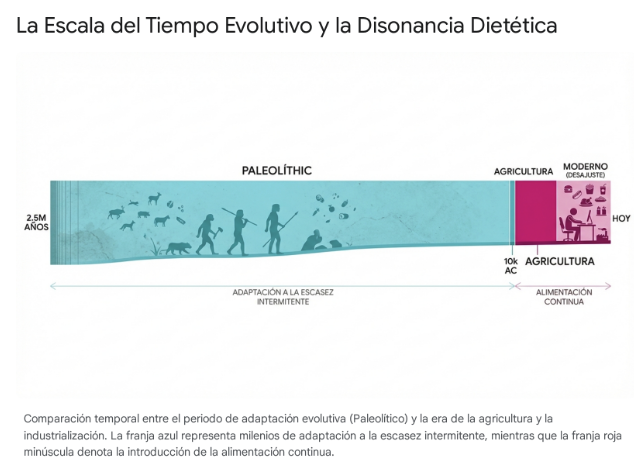
Contemporary human biology faces a fundamental paradox, a chronobiological and metabolic dissonance that defines 21st-century pathology. The genome of Homo sapiens, forged over 2.5 million years of selective pressures in the Paleolithic, is intrinsically designed to operate in an environment of stochastic scarcity and intermittent resource availability. However, this archaic organism now inhabits an obesogenic environment of perpetual abundance, characterized by the ubiquity of energy-dense foods and the absence of obligatory physical effort to obtain them.
Intermittent fasting, far from being a novel dietary intervention or a passing fad, represents a reversion to the metabolic baseline under which our species evolved. Current scientific research suggests that the systematic elimination of periods of caloric restriction—a defining feature of modern life since the Industrial Revolution—has generated metabolic “desynchronization.” This break with our ancestral biological rhythms is a primary contributing factor to the global epidemic of non-communicable chronic diseases, including type 2 diabetes, metabolic syndrome, cardiovascular disease, and neurodegeneration.1
This technical report dissects the evolutionary, biochemical, and clinical architecture of voluntary food deprivation. Through an exhaustive review of scientific literature, we will dismantle cultural myths regarding meal frequency, expose the cellular repair mechanisms that are activated exclusively in the absence of exogenous nutrients, and analyze the therapeutic applications and contraindications of fasting protocols.
1. Evolutionary and Anthropological Perspective: A Genome Forged in Scarcity
To understand the physiology of fasting, it is imperative to first contextualize the environment in which our metabolic traits were selected. During the Paleolithic, which spans the vast majority of human history, food availability was unpredictable. Hominids did not have guaranteed access to constant glucose, and survival depended on phenotypic plasticity: the ability to switch efficiently between anabolism (storage) and catabolism (mobilization of reserves).1
1.1 The Thrifty Gene Hypothesis and Its Critiques
In 1962, geneticist James Neel proposed the “Thrifty Gene Hypothesis,” positing that certain genotypes were positively selected because they conferred an exceptional survival advantage by allowing for efficient storage of fat and glycogen during brief periods of abundance. In an ancestral environment, individuals capable of rapidly accumulating adipose tissue survived subsequent famines; those with less efficient metabolism perished.5
This hypothesis has dominated evolutionary thought on obesity for decades, suggesting that type 2 diabetes and obesity are consequences of a “mismatch” between these thrifty genes and the modern environment of unlimited calories.3 However, more recent research, such as that led by John Speakman, has challenged this simplistic view. Speakman and colleagues argue that if selection by famine had been so strong, obesity genes would have become fixed in the entire population, which is not the case (not all modern humans are obese). They alternatively propose the “Drifty Gene Hypothesis,” suggesting that the release from predation pressure allowed genes controlling the upper limit of adiposity to mutate randomly.8
Despite academic debate over the exact mechanism of selection, the consensus remains that human physiology is extremely efficient at conserving energy and possesses robust mechanisms to defend body weight against weight loss, but weak mechanisms to prevent excessive weight gain in an environment of abundance.9
1.2 The Insurance Hypothesis and Adiposity as a Buffer
A relevant extension of evolutionary theory is the “Insurance Hypothesis.” This theory posits that adiposity acts as a buffer against variability in energy supply. In many vertebrate species, exposure to unpredictable food triggers an adaptive increase in body fat reserves. Paradoxically, in the modern human context, food insecurity (poverty) is often associated with obesity, not leanness. This suggests that evolved mechanisms perceive irregularity or low food quality as a signal of environmental instability, activating a biological response of maximum storage to “insure” future survival.11
1.3 Brain Expansion and Metabolic Cost
The evolution of the human brain, a metabolically expensive organ, is intimately linked to diet and fasting. Approximately 2 million years ago, with the emergence of Homo erectus, a significant increase in cranial capacity was observed. Aiello and Wheeler proposed that this was made possible by a dietary shift toward higher energy density foods (meat and marrow) and, crucially, the advent of cooking. Cooking food pre-digests starches and proteins, allowing for much faster and more efficient energy absorption, which in turn allowed for a reduction in the size of the gastrointestinal tract.1
This enlarged brain required a constant supply of energy. Faced with frequent failure in hunting, hominids developed exceptional “metabolic flexibility.” Unlike other primates, humans can enter deep nutritional ketosis, allowing the brain to function almost entirely on ketone bodies derived from body fat during days or weeks of fasting, preserving the cognitive functionality necessary to find new food.12
2. The Cultural Construction of Eating: The Origin of Three Meals
One of the biggest conceptual hurdles to adopting intermittent fasting is the deeply ingrained belief that eating three times a day (breakfast, lunch, and dinner) is a biological imperative. Historical and sociological evidence unequivocally demonstrates that this pattern is a recent cultural construct, driven by economic, religious, and labor factors, not physiological ones.
2.1 Classical Antiquity: Frugality and the “Cena”
In classical antiquity, the eating pattern was radically different from the modern one. The Romans, for example, structured their day around a single substantial meal, the cena, which was typically consumed at midday or early in the afternoon. Eating more than once a day was considered by many Roman moralists as a sign of gluttony (gula) or lack of self-control.14 Small morning snacks (ientaculum) or evening snacks (vesperna) existed, but they did not have the social or nutritional status of full meals.
Similarly, in ancient Greece, although concepts of three meals existed (akratisma, ariston, deipnon), breakfast was often little more than bread dipped in wine, and many citizens practiced restricted eating out of necessity or philosophy.14
2.2 The Middle Ages and Religious Influence
During the European Middle Ages, the influence of the Catholic Church profoundly shaped eating habits. Breakfast (literally “breaking the fast”) was a discouraged practice before morning mass. Devout Christians were expected to fast from the night before until receiving the Eucharist. Eating too early was associated with carnal weakness. St. Thomas Aquinas, in his Summa Theologica, classified eating too early (praepropere) as one of the forms of gluttony. Therefore, for the upper classes, breakfast was nonexistent or minimal; only manual laborers, the elderly, and the sick received dispensation to eat early due to physical necessity.15
2.3 The Industrial Revolution and Schedule Standardization
The definitive transition to the standardized three-meals-a-day model was a direct byproduct of the Industrial Revolution in the 18th and 19th centuries. Before industrialization, agricultural workers ate according to the availability of sunlight and natural breaks in field work. However, factory work required precise synchronization of human labor with machinery.
Production schedules dictated biological feeding schedules:
- Breakfast: Became a logistical necessity to load energy before long, uninterrupted shifts.
- Lunch: Evolved from the term “luncheon” or “nuncheon” (a light midday snack or drink) to a structured meal during the mid-shift break, necessary to maintain afternoon productivity.16
- Dinner: As workdays extended and with the arrival of artificial lighting (gas and later electricity), the main meal shifted toward the end of the day, becoming a nightly social and familial event.14
2.4 Modern “Snackification”: 1970 – 2020
If the Industrial Revolution created three meals, the modern era of processed foods has dissolved them into a continuous stream of caloric intake. Data from NHANES (National Health and Nutrition Examination Survey) in the United States show a dramatic shift over the last 40 years.
- 1970s: Most adults consumed few calories between meals. The eating window was narrower.
- 2020s: The number of “eating occasions” (meals + snacks) has increased significantly. The prevalence of snacking went from 71% to 97% of the population. The eating window has expanded to more than 12-15 hours daily for most of the population, almost completely eliminating periods of digestive rest and overnight fasting.19
This phenomenon has been driven by the ubiquity of ultra-processed foods designed for hyper-palatability and by marketing campaigns, such as those of John Harvey Kellogg in the early 20th century, who promoted breakfast cereals not only for convenience but as a moral tool to suppress “passions” through a bland, low-protein diet.14
3. Metabolic Functioning: Biochemistry of the Glucose-Fat Switch
The human body is not a simple combustion engine, but a sophisticated hybrid system capable of utilizing two primary energy substrates: glucose (derived from exogenous carbohydrates or gluconeogenesis) and fatty acids (derived from exogenous fats or adipose tissue). The ability to fluidly transition between these two fuels is known as “metabolic flexibility.” Intermittent fasting acts as a trainer for this mechanism, centering its action on the “metabolic switch.”
3.1 The Postprandial State (Anabolism)
Immediately following food intake (fed state), metabolism enters an anabolic phase (building and storage) dominated by the hormone insulin.
- Insulin Elevation: Blood glucose rises, triggering insulin secretion by pancreatic beta cells.
- Lipolysis Blockade: Insulin is a potent inhibitor of hormone-sensitive lipase (HSL). While insulin is elevated, the breakdown of stored fat is biochemically blocked. The body cannot access its fat reserves while processing food.22
- Storage: Glucose is oxidized for immediate energy or stored as glycogen in the liver (approx. 100g) and muscles (approx. 400g). Excess is converted to triglycerides via de novo lipogenesis and deposited in adipose tissue.22
3.2 The Metabolic Transition and Glycogen Depletion
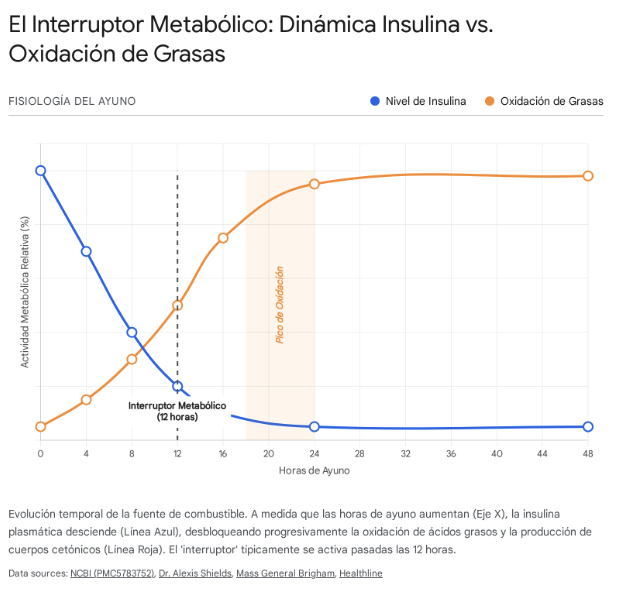
As intake ceases and hours pass (post-absorptive phase), insulin levels drop and glucagon (catabolic hormone) levels rise. The liver begins to break down its glycogen (glycogenolysis) to maintain stable blood glucose for the brain.
The critical point occurs when hepatic glycogen reserves are significantly depleted. Depending on the level of physical activity and the amount of carbohydrates previously consumed, this typically happens between 12 and 16 hours of fasting.13 It is here that the “metabolic switch” is activated.
3.3 Ketogenesis and Cellular Adaptation
Upon depletion of hepatic glycogen and with insulin at low basal levels:
- Massive Lipolysis: Triglycerides from adipose tissue are released as free fatty acids (NEFA) and glycerol.
- Beta-Oxidation: Most tissues (muscles, heart) begin to oxidize fatty acids directly.
- Ketone Production: The liver, unable to oxidize all the fatty acids it receives, diverts them to the ketogenesis pathway, producing ketone bodies: acetoacetate, beta-hydroxybutyrate (BHB), and acetone.
- Cerebral Superfuel: Unlike fatty acids, ketone bodies can cross the blood-brain barrier. The brain, which normally relies exclusively on glucose, begins to utilize ketones, which are more energetically efficient (produce more ATP per molecule of oxygen) and generate fewer reactive oxygen species (ROS) than glucose.13
This change is not just energetic, but signaling. BHB acts as a signaling molecule that inhibits histone deacetylases (HDACs), modulating gene expression to increase resistance to oxidative stress and longevity.13
3.4 Carbohydrate Addiction and the Ghrelin Cycle
A common phenomenon when starting fasting is the intense sensation of hunger, often misinterpreted as a real caloric need. Physiologically, this responds to two mechanisms:
- Ghrelin Conditioning: Ghrelin, the “hunger hormone,” is secreted in a pulsatile and anticipatory manner. If an individual is used to eating breakfast at 8:00 AM, their ghrelin will rise at 7:30 AM out of habit, not starvation. Fasting helps “retrain” these spikes.26
- Dopaminergic Cycle: Consumption of refined carbohydrates and sugars activates the brain’s reward centers (nucleus accumbens) similarly to addictive substances. The rapid drop in glucose following an insulin spike generates “craving.” Fasting breaks this cycle by stabilizing blood glucose and forcing dependence on fats, a stable “slow-burn” fuel.26
4. Chronology of Benefits: Hour-by-Hour Physiology
The benefits of fasting are not binary (fasting vs. non-fasting), but follow a temporal dose-response curve. Different cellular processes require different durations of nutrient deprivation to activate.
| Phase |
Duration |
Physiological State |
Mechanisms and Benefits |
| Phase 1: Postprandial |
0 – 4 hours |
Anabolic |
Active digestion. Glucose and insulin spike. Nutrient storage. Protein and fat synthesis. 22 |
| Phase 2: Early Catabolism |
4 – 12 hours |
Transition |
Insulin drops. Body switches to glycogen as main fuel. Increase in Growth Hormone (GH) to preserve muscle mass. 30 |
| Phase 3: The Metabolic Switch |
12 – 16 hours |
Lipid Oxidation |
Critical glycogen depletion. Onset of significant fat burning. Beginning of Basal Autophagy: cells start internal cleaning processes. 13 |
| Phase 4: Systemic Autophagy |
16 – 24 hours |
Mild Ketosis |
Autophagy Peak: Inhibition of mTOR pathway and activation of AMPK. Recycling of misfolded proteins and damaged organelles. Notable improvement in insulin sensitivity. 30 |
| Phase 5: Deep Ketosis |
24 – 48 hours |
Nutritional Ketosis |
Elevated levels of BHB (ketones). Increase in BDNF (Brain-Derived Neurotrophic Factor), promoting neuroplasticity and neurogenesis. Massive reduction in systemic inflammation. 31 |
| Phase 6: Immune Regeneration |
48 – 72+ hours |
Survival |
Drastic drop in IGF-1. Apoptosis of senescent immune cells. Preparation for hematopoietic stem cell regeneration upon refeeding (Valter Longo Effect). 33 |
5. Chronobiology and Circadian Rhythms
Intermittent fasting is not just about how much you eat, but when you eat. The science of chrononutrition studies the interaction between feeding cycles and the body’s circadian clocks.
5.1 Central and Peripheral Clocks
The human body possesses a master clock in the suprachiasmatic nucleus (SCN) of the brain, regulated by light, and peripheral clocks in almost all cells, especially the liver, regulated by food intake. When we eat late at night (during the biological dark phase), we desynchronize these clocks. The liver activates to process nutrients while the brain secretes melatonin for sleep, resulting in impaired glucose tolerance and increased fat storage.36
5.2 Time-Restricted Eating (TRE)
Studies demonstrate that restricting the eating window to 8-10 hours during the active phase of the day (aligned with sunlight) prevents metabolic diseases even without changes in total caloric intake. Robust overnight fasting allows for adequate rhythmic expression of clock genes (Per1, Per2, Cry1, Cry2) and optimizes hepatic mitochondrial function.36
6. Fasting and Disease: Specific Clinical Applications
The impact of fasting varies drastically depending on the pathology. It is not a universal panacea, but a precise biological tool that modulates inflammation and energy metabolism in specific ways.
6.1 Gastroenterology: The Migrating Motor Complex and Reflux (GERD)
Intermittent fasting has been shown to significantly improve symptoms of Gastroesophageal Reflux Disease (GERD).
- MMC Mechanism: The Migrating Motor Complex (MMC) is a pattern of electromechanical waves that sweeps the gastrointestinal tract. Its function is to clean food residue and bacteria from the stomach and small intestine into the colon, preventing Small Intestinal Bacterial Overgrowth (SIBO) and abdominal distension that causes reflux.
- Activation: Crucially, the MMC only activates in a fasted state, approximately 90 to 120 minutes after the last intake. Constant “snacking” inhibits the MMC, paralyzing this cleaning mechanism.
- Evidence: Studies indicate that a 16:8 fasting regimen can reduce acid exposure time in the esophagus and improve symptom scores for regurgitation and heartburn by allowing complete MMC cycles and reducing nocturnal intra-gastric pressure.40
6.2 Immunology: The Bacterial vs. Viral Paradox
A critical distinction in the immunology of fasting was revealed by Ruslan Medzhitov’s lab at Yale.44 The study demonstrated that nutritional status dictates survival depending on the pathogen type:
- Bacterial Infections (Protective Effect): During bacterial infections (e.g., Listeria, Salmonella), fasting is beneficial. Bacteria often sequester glucose and iron from the host. Fasting induces “nutritional hypoferremia” and switches metabolism to ketones, which protect neurons and tissues from oxidative damage caused by bacterial inflammation. Anorexia (loss of appetite) during fever is an adaptive evolutionary response.44
- Viral Infections (Detrimental Effect): In contrast, during viral infections (e.g., Influenza), fasting was lethal in murine models. The immune system requires glucose to mount an effective antiviral response and, more importantly, the brain requires glucose to tolerate virus-induced cellular stress. Glucose administration (feeding) was necessary for survival.44
- Fungal Interactions: The relationship with fungi like Candida albicans is nuanced. Candida is glucose-dependent; thus, fasting and the ketogenic diet can limit its proliferation and virulence in the gastrointestinal tract. Studies show that fasting interrupts pathogen invasion of the intestinal barrier, reducing systemic inflammation. However, chronic prolonged fasting could theoretically reduce certain immune resources in the long term, suggesting that intermittent (cyclic) fasting is safer than chronic caloric restriction for fungal defense.46
7. Prolonged Fasting and Cellular Regeneration: The Longevity Protocol
Beyond weight loss, prolonged fasting (48 to 72+ hours) enters the realm of regenerative medicine, driven largely by the research of Dr. Valter Longo and the USC Longevity Institute.
7.1 The Depletion and Regeneration Mechanism
Prolonged fasting induces a state of hormetic stress that forces the organism to optimize its resources.
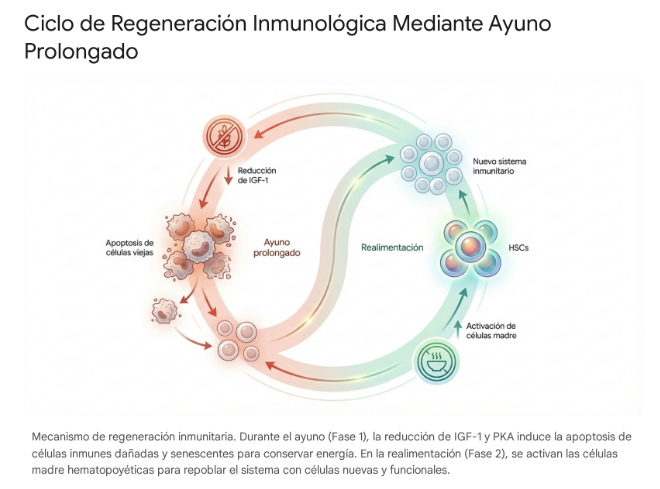
- IGF-1 Reduction: Fasting drastically reduces circulating levels of Insulin-like Growth Factor 1 (IGF-1). High levels of IGF-1 are associated with accelerated aging and cancer, while low levels protect DNA and reduce tumor growth.33
- Selective Apoptosis: To conserve energy, the body first breaks down old, damaged, or inefficient immune cells (immunosenescence). A significant reduction in white blood cell count is observed during fasting.
- Stem Cell Activation: The critical phase occurs during refeeding. Upon reintroducing nutrients, the low PKA (Protein Kinase A) signal and previous low IGF-1 levels trigger massive proliferation of hematopoietic stem cells (HSC). These stem cells “rebuild” the immune system with new, functional cells, effectively reversing immune age and mitigating the effects of chemotherapy.34
8. Exercise Physiology in Fasting
The combination of fasting and exercise is a potent strategy for maximizing metabolic flexibility.
- Fat Oxidation: Exercise performed in a fasted state (especially low-intensity cardio or “Zone 2”) forces the body to rely on intramuscular triglycerides (IMTG) and adipose tissue, since hepatic glycogen is low. Studies show that fat oxidation can be significantly higher in a fasted state compared to a fed state.52
- Mitochondrial Biogenesis: Training with low carbohydrate availability activates transcription factors like PGC-1alpha, which stimulate the creation of new mitochondria in skeletal muscle. This counteracts the effects of the modern “sedentary revolution,” where lack of activity and excess food have atrophied our oxidative capacity.10
9. Contraindications and Risk Profile
Despite its evolutionary basis, intermittent fasting is not innocuous and presents clear contraindications in the modern context:
- Eating Disorders (ED): There is a significant risk that fasting may mask or exacerbate anorexia nervosa or bulimia. The rigidity of “eating windows” can legitimize pathological restrictive behaviors.25
- Pregnancy and Lactation: These are obligatory anabolic states. Prolonged fasting can mobilize lipophilic toxins stored in maternal fat into the bloodstream, affecting the fetus, in addition to restricting essential nutrients for growth.25
- Type 1 Diabetes: The risk of ketoacidosis and hypoglycemia is high. Although some supervised studies show benefits, it requires strict medical monitoring to adjust basal insulin.57
- Pharmacology: Medications that require food intake for absorption or to protect the gastric mucosa (e.g., NSAIDs) can be problematic. Furthermore, fasting potentiates the effect of antihypertensives and antidiabetics, increasing the risk of hypotension and hypoglycemic shock.57
Conclusion
Convergent multidisciplinary scientific evidence—from evolutionary anthropology to stem cell molecular biology—indicates that intermittent fasting is not merely a dietary strategy for weight loss, but a fundamental physiological state encoded in our genome. The modern “normality” of three meals a day plus constant snacks represents a historical anomaly that keeps the body in a perpetual anabolic state, blocking critical cellular repair mechanisms (autophagy), gastrointestinal cleaning (MMC), and immune regeneration.
Reintroducing variability in energy intake restores lost metabolic flexibility. However, this ancestral tool must be applied with clinical precision in the modern world, differentiating contexts (viral vs. bacterial infection, metabolic health vs. pregnancy) to maximize evolutionary benefits while mitigating contemporary risks.
Obras citadas
- Paleolithic Diet – StatPearls – NCBI Bookshelf, fecha de acceso: enero 6, 2026, https://www.ncbi.nlm.nih.gov/books/NBK482457/
- Do Not Feed the Humans: The Paleolithic Diet and Intermittent Fasting – Neurological Associates The Interventional Group | Santa Monica & Los Angeles, fecha de acceso: enero 6, 2026, https://www.neurologysantamonica.com/do-not-feed-the-humans-the-paleolithic-diet-and-intermittent-fasting/
- BEYOND THE PALEOLITHIC PRESCRIPTION: INCORPORATING DIVERSITY AND FLEXIBILITY IN THE STUDY OF HUMAN DIET EVOLUTION – PMC – PubMed Central, fecha de acceso: enero 6, 2026, https://pmc.ncbi.nlm.nih.gov/articles/PMC4091895/
- Paleo diet: What is it and why is it so popular? – Mayo Clinic, fecha de acceso: enero 6, 2026, https://www.mayoclinic.org/healthy-lifestyle/nutrition-and-healthy-eating/in-depth/paleo-diet/art-20111182
- Eating, exercise, and “thrifty” genotypes: connecting the dots toward an evolutionary understanding of modern chronic diseases, fecha de acceso: enero 6, 2026, https://journals.physiology.org/doi/full/10.1152/japplphysiol.00757.2003
- Thrifty gene hypothesis – Wikipedia, fecha de acceso: enero 6, 2026, https://en.wikipedia.org/wiki/Thrifty_gene_hypothesis
- Thinking Evolutionarily About Obesity – PMC – PubMed Central, fecha de acceso: enero 6, 2026, https://pmc.ncbi.nlm.nih.gov/articles/PMC4031802/
- Obesity Genes Probably Didn’t Evolve to Help Us Survive Famine, fecha de acceso: enero 6, 2026, https://english.cas.cn/newsroom/archive/research_archive/rp2016/201610/t20161008_168425.shtml
- Integrating the Thrifty Genotype and Evolutionary Mismatch Hypotheses to understand variation in cardiometabolic disease risk – NIH, fecha de acceso: enero 6, 2026, https://pmc.ncbi.nlm.nih.gov/articles/PMC11525211/
- The sedentary (r)evolution: Have we lost our metabolic flexibility? – ResearchGate, fecha de acceso: enero 6, 2026, https://www.researchgate.net/publication/320167019_The_sedentary_revolution_Have_we_lost_our_metabolic_flexibility
- Food insecurity as a cause of adiposity: evolutionary and mechanistic hypotheses, fecha de acceso: enero 6, 2026, https://royalsocietypublishing.org/rstb/article/378/1888/20220228/109246/Food-insecurity-as-a-cause-of-adiposity
- Control of Fire in the Paleolithic : Evaluating the Cooking Hypothesis | Current Anthropology: Vol 58, No S16 – The University of Chicago Press: Journals, fecha de acceso: enero 6, 2026, https://www.journals.uchicago.edu/doi/full/10.1086/692113
- Flipping the Metabolic Switch: Understanding and Applying Health Benefits of Fasting – PMC, fecha de acceso: enero 6, 2026, https://pmc.ncbi.nlm.nih.gov/articles/PMC5783752/
- A Simple History of Why We Eat Three Meals a Day | by Garima Dev Verman | Medium, fecha de acceso: enero 6, 2026, https://medium.com/@garima123devverman/a-simple-history-of-why-we-eat-three-meals-a-day-c0c9d5cfabaa
- Who first invented the concept of Three Square Meals? When did the practive of having three meals a day begin? – Reddit, fecha de acceso: enero 6, 2026, https://www.reddit.com/r/AskAnthropology/comments/jno5rm/who_first_invented_the_concept_of_three_square/
- fecha de acceso: enero 6, 2026, https://medium.com/@garima123devverman/a-simple-history-of-why-we-eat-three-meals-a-day-c0c9d5cfabaa#:~:text=No%20one%20person%20created%20the,pattern%20to%20places%20like%20America.
- Why Do Americans Eat Three Meals a Day? – JSTOR Daily, fecha de acceso: enero 6, 2026, https://daily.jstor.org/why-do-americans-eat-three-meals-a-day/
- “Three Squares: The Invention of the American Meal” – WPR, fecha de acceso: enero 6, 2026, https://www.wpr.org/shows/larry-meiller-show/three-squares-invention-american-meal
- Meal Timing and Frequency: Implications for Cardiovascular Disease Prevention: A Scientific Statement From the American Heart As, fecha de acceso: enero 6, 2026, https://www.ddg.info/fileadmin/user_upload/01_Die_DDG/03_Ausschuesse/02_Ernaehrung/CIR.0000000000000476.pdf
- Snacking Increased among U.S. Adults between 1977 and 2006 – PMC, fecha de acceso: enero 6, 2026, https://pmc.ncbi.nlm.nih.gov/articles/PMC2806886/
- FIFTEEN-YEAR TRENDS IN THE PATTERNS OF MEAL TIMING AND EATING FREQUENCY AMONG US ADULTS – PMC – NIH, fecha de acceso: enero 6, 2026, https://pmc.ncbi.nlm.nih.gov/articles/PMC9770450/
- What Are the Different Stages of Intermittent Fasting? – Healthline, fecha de acceso: enero 6, 2026, https://www.healthline.com/nutrition/stages-of-fasting
- Metabolic Flexibility as an Adaptation to Energy Resources and Requirements in Health and Disease – PubMed Central, fecha de acceso: enero 6, 2026, https://pmc.ncbi.nlm.nih.gov/articles/PMC6093334/
- Insulin Resistance: From Mechanisms to Therapeutic Strategies – Diabetes & Metabolism Journal, fecha de acceso: enero 6, 2026, https://www.e-dmj.org/journal/view.php?number=2614
- Intermittent Fasting Benefits, Risks, and How it Works | Mass General Brigham, fecha de acceso: enero 6, 2026, https://www.massgeneralbrigham.org/en/about/newsroom/articles/pros-and-cons-of-intermittent-fasting
- Understanding Carb Cravings: Biology and Environment – Signos, fecha de acceso: enero 6, 2026, https://www.signos.com/blog/why-we-crave-carbs
- Ghrelin Hormone: Function and Definition – Cleveland Clinic, fecha de acceso: enero 6, 2026, https://my.clevelandclinic.org/health/body/22804-ghrelin
- Food Addiction, High Glycemic Index Carbohydrates and Obesity – PMC – PubMed Central, fecha de acceso: enero 6, 2026, https://pmc.ncbi.nlm.nih.gov/articles/PMC5912158/
- The Stages of a 72-Hour Fast: Understanding the Changes Inside and Outside Your Body, fecha de acceso: enero 6, 2026, https://fastic.com/en/blog/stages-of-fasting-by-hour
- A Comprehensive Guide To Fasting : Timeline, Stages & Benefits – Dr. Alexis Shields, fecha de acceso: enero 6, 2026, https://dralexisshields.com/guide-to-fasting
- The 5 Stages of Fasting (And The Benefits of Each One) – Perfect Keto, fecha de acceso: enero 6, 2026, https://perfectketo.com/the-5-stages-of-fasting/
- Autophagy: Definition, Process, Fasting & Signs – Cleveland Clinic, fecha de acceso: enero 6, 2026, https://my.clevelandclinic.org/health/articles/24058-autophagy
- Prolonged fasting ‘re-boots’ immune system – Medical News Today, fecha de acceso: enero 6, 2026, https://www.medicalnewstoday.com/articles/277860
- When Fasting Gets Tough, the Tough Immune Cells Get Going—or Die – PMC – NIH, fecha de acceso: enero 6, 2026, https://pmc.ncbi.nlm.nih.gov/articles/PMC7474734/
- Fasting triggers stem cell regeneration of damaged, old immune system, fecha de acceso: enero 6, 2026, https://stemcell.keck.usc.edu/fasting-triggers-stem-cell-regeneration-of-damaged-old-immune-system/
- Fasting, circadian rhythms, and time restricted feeding in healthy lifespan – PubMed Central, fecha de acceso: enero 6, 2026, https://pmc.ncbi.nlm.nih.gov/articles/PMC5388543/
- Timing Matters: The Interplay between Early Mealtime, Circadian Rhythms, Gene Expression, Circadian Hormones, and Metabolism—A Narrative Review – PubMed Central, fecha de acceso: enero 6, 2026, https://pmc.ncbi.nlm.nih.gov/articles/PMC10528427/
- Time-restricted eating: Watching the clock to treat obesity – PMC – NIH, fecha de acceso: enero 6, 2026, https://pmc.ncbi.nlm.nih.gov/articles/PMC11221496/
- Impact of exercise and fasting on mitochondrial regulators in human muscle – PMC – NIH, fecha de acceso: enero 6, 2026, https://pmc.ncbi.nlm.nih.gov/articles/PMC11653475/
- The Impact of Intermittent Fasting on Patients With Suspected Gastroesophageal Reflux Disease – PubMed, fecha de acceso: enero 6, 2026, https://pubmed.ncbi.nlm.nih.gov/36730832/
- Could intermittent fasting improve GERD symptoms? | MDedge – The Hospitalist, fecha de acceso: enero 6, 2026, https://blogs.the-hospitalist.org/content/could-intermittent-fasting-improve-gerd-symptoms
- Mechanism of Interdigestive Migrating Motor Complex – PMC – PubMed Central, fecha de acceso: enero 6, 2026, https://pmc.ncbi.nlm.nih.gov/articles/PMC3400812/
- Gastro-oesophageal reflux and the migrating motor complex – PMC – NIH, fecha de acceso: enero 6, 2026, https://pmc.ncbi.nlm.nih.gov/articles/PMC1433142/
- Listening to the body: Study examines the effects of fasting on …, fecha de acceso: enero 6, 2026, https://news.yale.edu/2016/09/08/listening-body-study-examines-effects-fasting-infections
- No food for 2 days keeps the doctor away: the impact of fasting on infection – BioTechniques, fecha de acceso: enero 6, 2026, https://www.biotechniques.com/microbiology/no-food-for-2-days-keeps-the-doctor-away-the-impact-of-fasting-on-infection/
- Fasting increases microbiome-based colonization resistance and reduces host inflammatory responses during an enteric bacterial infection – PubMed Central, fecha de acceso: enero 6, 2026, https://pmc.ncbi.nlm.nih.gov/articles/PMC8341583/
- Opposing Effects of Fasting Metabolism on Tissue Tolerance in Bacterial and Viral Inflammation – PMC, fecha de acceso: enero 6, 2026, https://pmc.ncbi.nlm.nih.gov/articles/PMC5555589/
- The Role of Autophagy-Related Proteins in Candida albicans Infections – PubMed Central, fecha de acceso: enero 6, 2026, https://pmc.ncbi.nlm.nih.gov/articles/PMC4931385/
- Manipulation of Host Diet To Reduce Gastrointestinal Colonization by the Opportunistic Pathogen Candida albicans – PubMed Central, fecha de acceso: enero 6, 2026, https://pmc.ncbi.nlm.nih.gov/articles/PMC4863630/
- Commensal fungi Candida albicans modulates dietary high-fat induced alterations in metabolism, immunity, and gut microbiota | bioRxiv, fecha de acceso: enero 6, 2026, https://www.biorxiv.org/content/10.1101/2022.03.23.485455.full
- Prolonged Fasting reduces IGF-1/PKA to promote hematopoietic stem cell-based regeneration and reverse immunosuppression – NIH, fecha de acceso: enero 6, 2026, https://pmc.ncbi.nlm.nih.gov/articles/PMC4102383/
- Effects of aerobic exercise performed in fasted v. fed state on fat and carbohydrate metabolism in adults: a systematic review and meta-analysis | British Journal of Nutrition – Cambridge University Press & Assessment, fecha de acceso: enero 6, 2026, https://www.cambridge.org/core/journals/british-journal-of-nutrition/article/effects-of-aerobic-exercise-performed-in-fasted-v-fed-state-on-fat-and-carbohydrate-metabolism-in-adults-a-systematic-review-and-metaanalysis/0EA2328A0FF91703C95FD39A38716811
- Low‐intensity exercise stimulates bioenergetics and increases fat oxidation in mitochondria of blood mononuclear cells from sedentary adults – PMC, fecha de acceso: enero 6, 2026, https://pmc.ncbi.nlm.nih.gov/articles/PMC7305243/
- Mastering Metabolic Flexibility in Zone 2 Training – TrainingPeaks, fecha de acceso: enero 6, 2026, https://www.trainingpeaks.com/blog/mastering-metabolic-flexibility/
- Zone 2 training: Boosting endurance, metabolism, and mitochondrial health – Elfcare, fecha de acceso: enero 6, 2026, https://elf.care/resources/zone-2
- Intermittent fasting: consider the risks of disordered eating for your patient – PMC, fecha de acceso: enero 6, 2026, https://pmc.ncbi.nlm.nih.gov/articles/PMC10589984/
- 5 Times You Should Avoid Intermittent Fasting | Bastyr University, fecha de acceso: enero 6, 2026, https://bastyr.edu/about/news/5-times-you-should-avoid-intermittent-fasting
- Intermittent fasting for weight loss – Mayo Clinic Health System, fecha de acceso: enero 6, 2026, https://www.mayoclinichealthsystem.org/hometown-health/speaking-of-health/intermittent-fasting-fad-or-solution
Medical Disclaimer: The mission of Caloritrack (developed and legally operated by KAI STUDIOS, S.A.S.) is to provide you with evidence-based tools and information to take control of your well-being. This in-depth study has been written for purely informational and educational purposes. KAI STUDIOS, S.A.S. is not a healthcare provider. The information presented here should not be interpreted under any circumstance as personalized medical advice, nor is it intended to diagnose, treat, cure, or prevent any disease. Every body is unique; therefore, we strongly urge you to consult with your trusted physician or qualified healthcare professional before implementing new habits, fasting protocols, or metabolic changes based on this study.